Q: Can you define “hunger” for us as well as community food security?
A: Hunger is a condition where individuals do not have enough food to meet their daily nutritional needs, leading to physical weakness, malnutrition, and a weakened immune system. Community food security is about ensuring that all people in a community have access to sufficient, safe, and nutritious food for a healthy and active life.
Q: How does agricultural training transform a family and their future opportunities?
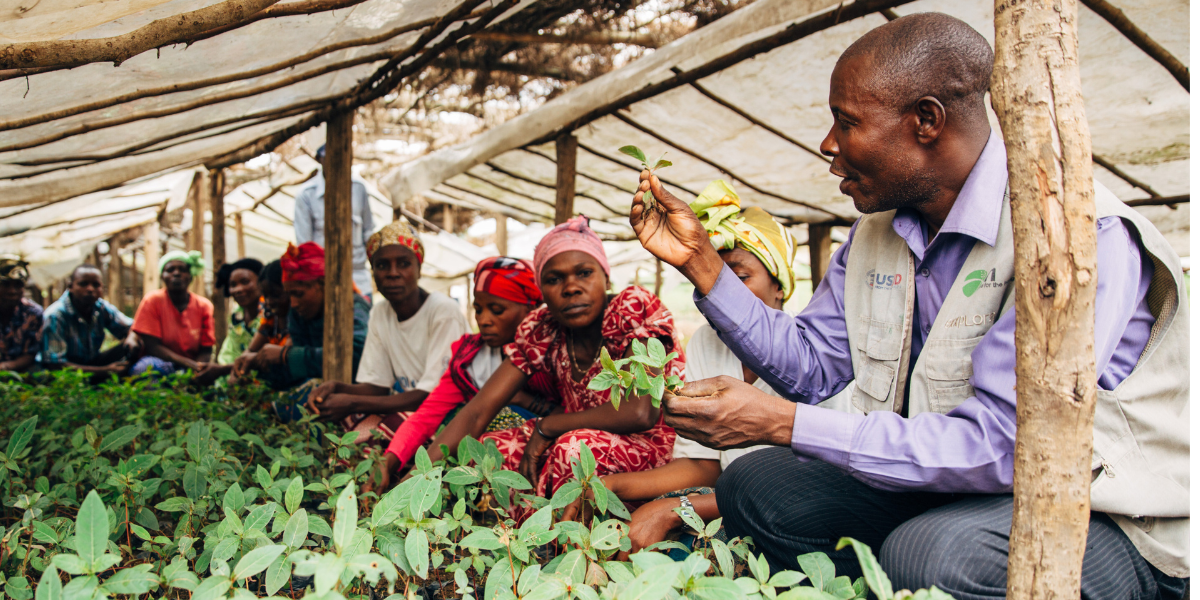
A: Agricultural training has the power to transform families, lifting them out of hunger and poverty into a future of stability and opportunity. For many families in Rwanda, limited farming knowledge and poor soil management mean low yields and constant food insecurity. But when parents receive training in improved farming techniques, everything changes!
Q: Can you give an example of how you’ve seen that happen in Rwanda?
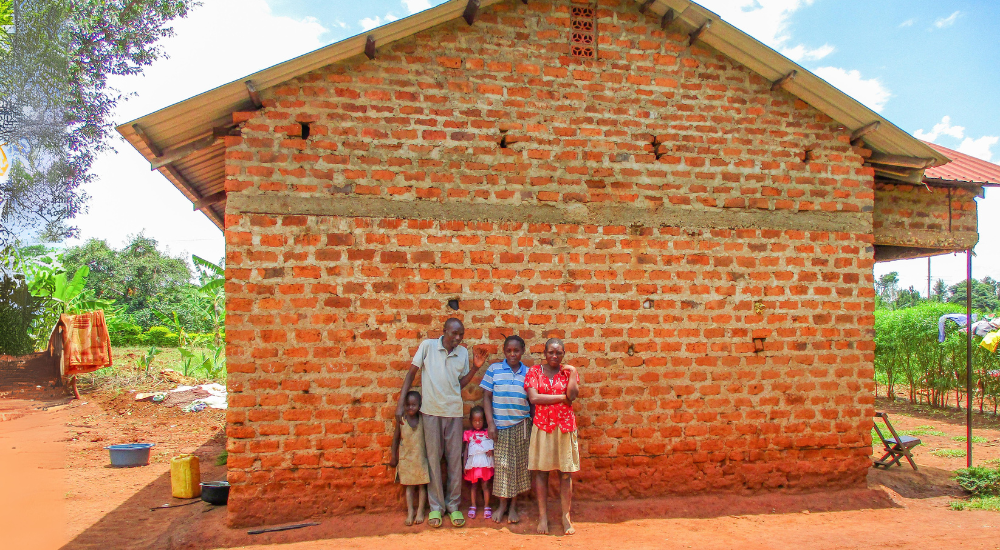
A: Yes! There is Marie, a mother of four who once struggled to feed her children. Before training, her farm produced little beyond cassava and maize, leaving her family malnourished. Through farmer field schools she learned about soil fertility, crop diversification, and post-harvest handling. She started growing nutrient-rich vegetables and practicing sustainable farming. In just one season, her harvest doubled! Not only could she feed her children nutritious meals, but she also sold surplus produce, earning enough to afford school fees and healthcare. Her children, once weak from malnutrition, became healthier and more energetic in school.
“Agricultural training doesn’t just grow food, it grows futures. It empowers families to break the cycle of hunger.” — Donat, Rwanda
Let’s Restore Hope
An estimated 733 million people live in chronic hunger. That’s one in eleven people globally. Today, due to escalating conflict, soaring inflation, and unprecedented weather events, a mind- boggling 1.9 million people have been pushed into full-on starvation. The world has lost 15 years of progress in the fight against hunger.
But there is hope! Together, we can—and are—making a difference.
Since 2021, Canadians have supported over 8,000 people to access agricultural training and learn to grow gardens, raise livestock, sell produce, and more through partnership with FH Canada! Thousands of parents like Marie are now trained to grow long-term solutions to hunger and thriving futures for their children. Together, we pulled families back from the brink of extreme hunger. Your gift combined with the gifts of thousands of Canadians creates an overflowing cascade of support that is ending hunger.
Across the globe, 733 million people are hungry. They go to bed on empty stomachs nearly every night. Every day, parents wonder how they will feed their children.
But what is more relentless than hunger? Hope.
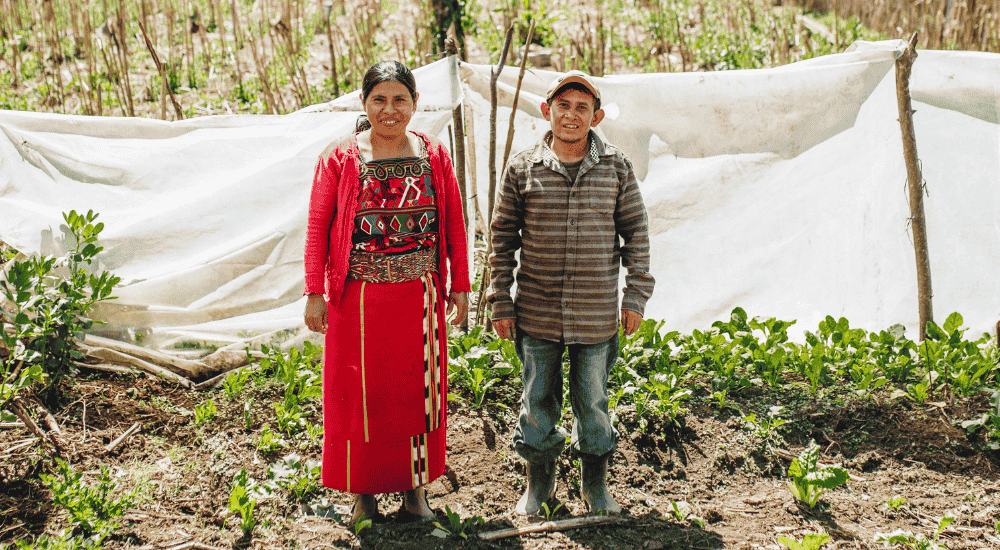
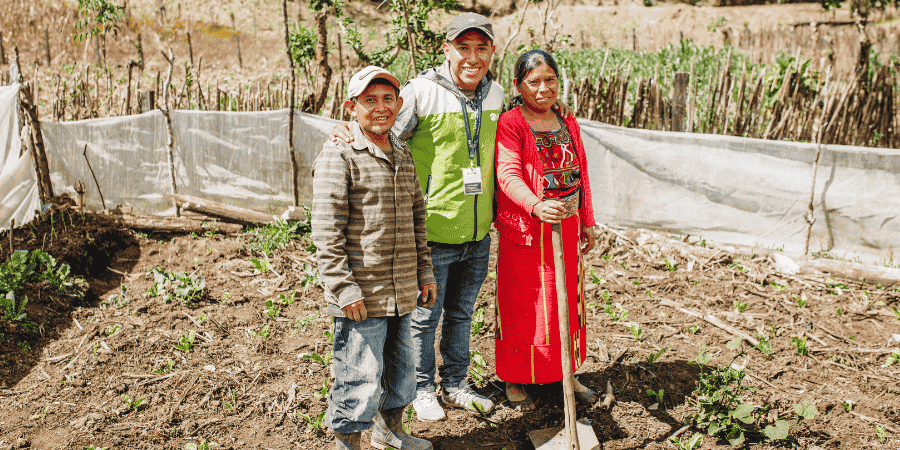
Diego, a father in Guatemala, faced hunger daily. He worked tirelessly, but his dry land refused to produce enough food for his children. His vegetables always failed.
“Before, my life was different,” Diego remembers. “I was afraid… I planted my vegetables, but [they never grew.] All I saw was loss.”
Diego built a greenhouse to grow tomatoes, but they died and his investment was wasted. “All of this affected me emotionally and demotivated me.”
“Seeing the losses in my crop made me very sad because it was a big loss. But, it gave me more reasons to continue and improve.”
Diego never gave up. And his story didn’t end there.
“The most important thing is to fight and persevere,” he told us. His fierce determination turned his harsh reality into hope!
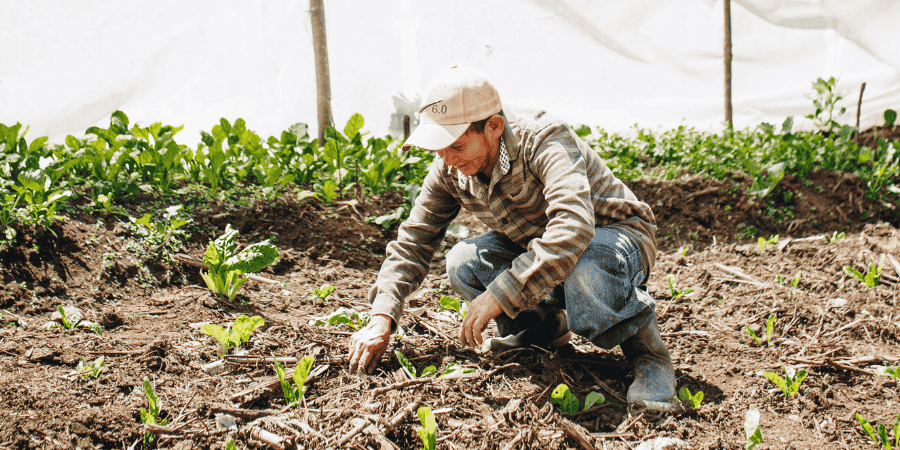
Diego enriched his soil using sheep manure and learned to plant his crops at proper distances for a plentiful harvest.
When Diego’s community partnered with FH Guatemala, he attended family garden training and gained agricultural knowledge that transformed his garden and his life!
Diego learned to enrich his soil using manure and planted his crops in improved ways to bring real harvests. His land flourished and he grew fresh, nutritious vegetables to help his children grow strong.
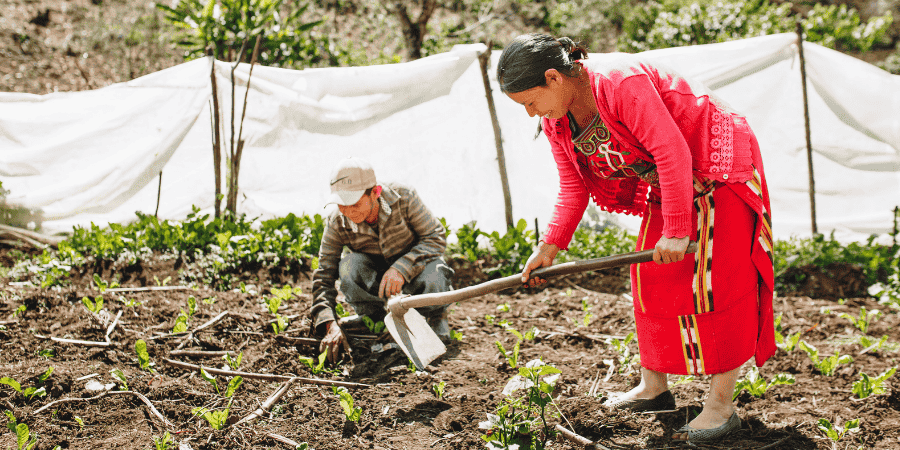
At the same time, his wife joined a women’s savings group, learning entrepreneurial skills alongside other women and mothers in the community. Together, they began to change their family’s future.
For Diego and his wife, Maria, teamwork is key! Together, they’ve been changing their family’s future.
“Now I can differentiate the types of vegetables and the appropriate distance [to plant them] so that the plants can develop in a good way… I know that [the importance of] consuming healthy food. Now I can produce and I do not have to go to the market to look for contaminated vegetables.”
Today, Diego teaches these farming methods to his neighbours. Although their community doesn’t have a market, the community knows that Diego has fresh, nutritious vegetables and they buy their produce directly from him.
“I can guarantee that my neighbours consume fresh vegetables,” Diego shares.
He’s helping put food on their tables!
“Seeing these changes in my community gives me a lot of joy,” Diego beams. “Because it is not only for me, but for my children.”
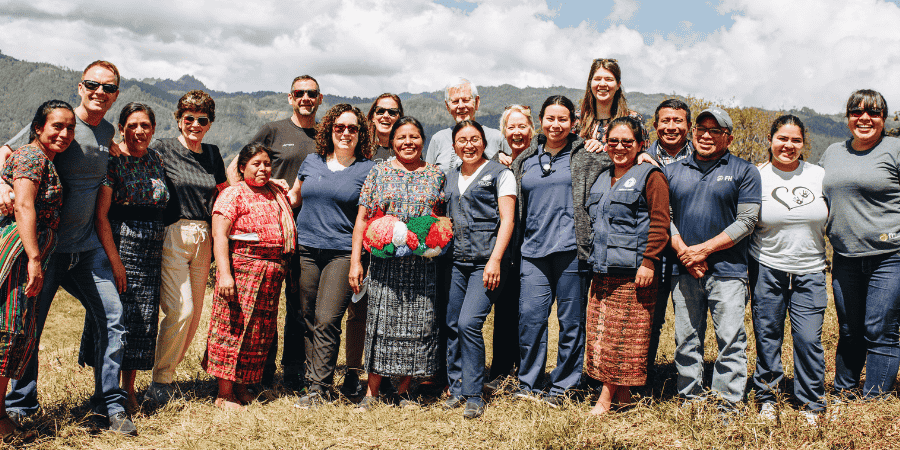
FH Guatemala staff have seen Diego and Maria’s life transform!
While the global hunger situation is dire—with 152 million more people hungry today than in 2019—we can reverse hunger. You can send immediate food relief and help families develop long-term solutions to hunger like growing gardens and raising livestock.
Remember Diego’s relentless hope? This hope and determination is what planted a new, food-secure future for his family. He reminds us, “The most important thing is to take God as a priority. If we do, things will turn out in an incredible way.”
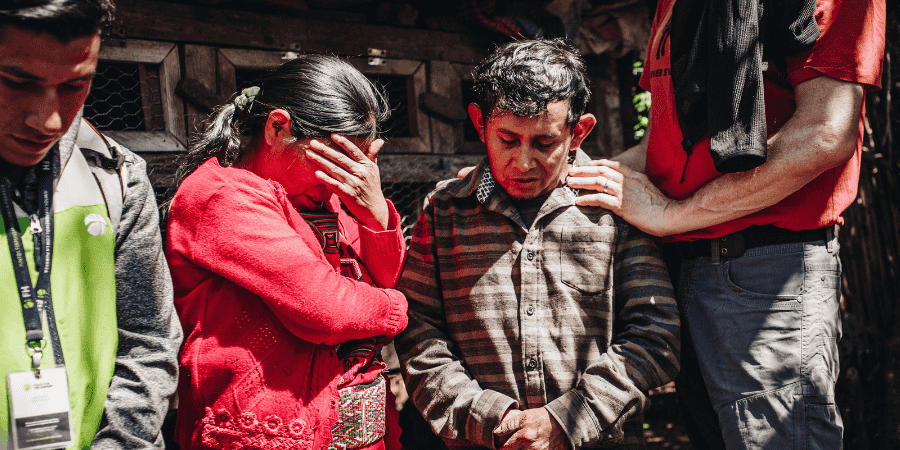
FH Guatemala staff pray with Diego and Maria. The source of Diego’s hope is his faith!
Will you stand with us and help fill family food baskets? Your support made a difference for Diego’s family—but families like his urgently need you again today.
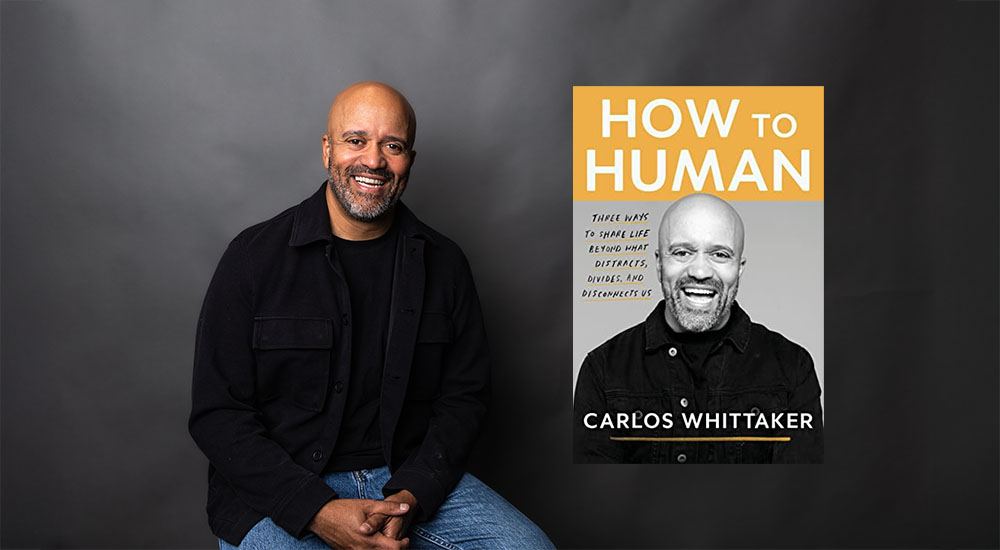
When was the last time you intentionally went out of your comfort zone to connect with someone different from you? If you feel you’ve been caught in rhythms of polarization and busyness, then How To Human is the book for you. In this book, Carlos Whitaker examines our lost socialization skills, highlights how Jesus modelled humanity, and inspires us to reconnect with each other on a deeper level.
I first “met” Carlos when I followed his Instagram page in 2019 when he rescued a baby robin. His wonder and sincere compassion compelled me to continue to learn from his content. This same curiosity and love for others is sewn into every page of How To Human.
While our culture requires us to prioritize productivity, How to Human shows us how to slow down, pay attention, and rekindle our love for creation and humanity.
Carlos’ enthusiastic storytelling, passion and conviction captivated and helped me understand relationship and reconciliation through the lens of Jesus.
How To Human primarily addresses the modern crisis of a lack of connection. Carlos’ solutions to this disconnect reminded me of how our cultures’ way of connecting has shifted since I was young. My childhood was full of Sundays set aside to spend with family and friends. Our homes were always full of guests, often connecting over a simple meal around the table. Music filled the background, not the sound of a TV. Adults shared their life journey over steaming cups of coffee while kids played outside with imagination as their greatest resource. We took the time to see and embrace each other. This is how Carlos understands Jesus’ lifestyle- he kept life simple and cared about loving God and people.
However, as time passed, we drifted away from these ways of connecting. We were not designed for a vast digital tie with the world and consequently, it limits our ability to connect with our community. Our imaginations became stifled and we traded our leisurely meals for a packed and fast paced schedule. It is easier to sit alone at home and see each other through a screen than to open our doors and hearts to all types of people. We understand how important it is to recognize others and their needs, but we less often put this understanding into action.
Carlos reminds us that if we want to embrace our humanity, we must recover our compassion and wonder and put them into practice. According to Carlos, our effort to authentically see other humans is not the finish line. Every person has a God-given need to be seen, and this requires us to stretch ourselves even further – to free them and ourselves.
Carlos explains that we can find our freedom when we help others discover their freedom. In the same way, we can’t help others be more human without becoming more human ourselves.
Our inability to disagree with one another without hatred is another major block to connection. Our attempts to listen to one another became lost in an effort “to feel right more than wanting to be right”.
However, if we look closely at the way that Jesus lived his life, “we see that He really loved seeing a few groups of people that others didn’t want to see. Women. The poor. Oppressors. Racial enemies.” This connection was centered upon loving others, not self righteousness. Jesus didn’t protect, heal and serve only his own people, He is love to ALL people. As our local community grows in ethnic diversity, we seldom ask our new neighbours to share their stories with us face to face. Carlos challenges us to confront our subconscious biases and intentionally reach out to those who are different from us. This is a sobering reminder that every person we interact with was made by The Creator himself!
Carlos shares how to move toward this model through his three part exploration “to be human, see fellow humans, and free those around us”, and his writing style reads like a conversation between two friends. How to Human is inspirational and practical and inspires readers to create fresh connections with their community, regardless of differences and the divides in a post-COVID world defined by digital media. Through powerful, gripping and vulnerable stories, Carlos highlights bold and culture-defying moments of courage that broke down his own biases and moved him towards connection.
To hear more of Carlos’ stories and be inspired to reconnect with your community, FH Canada’s Flourishing event is perfect for you. At Flourishing, Carlos will take a deep dive into these themes and guide us through connection and poverty alleviation. I look forward, with great anticipation, to hearing Carlos speak about human flourishing as we strive to end poverty together. My hope is that you will join us too! As Carlos says, come join us at “human school”, class is now in session.
Scovia, a resilient mother of eight in Bukiende, recalls a time when poverty overshadowed her relationships with her husband, children, and community.
Scovia tended to quarrel with neighbours, so she had no friends to rely on. At home, her husband’s neglect made her feel more isolated and she took out her frustration on her children, causing them to grow distant. “I felt like a bad mother… I didn’t have hope that my life would change,” Scovia reflects.
Even though she worked hard to support her family, her small farm didn’t produce enough to feed her children and pay medical bills. They survived on one or two meals a day, often missing school because of poor nutrition.
Yet, Scovia remembers, she prayed everyday for a change.
When empowerment leads to community
When FH partnered with her community, Scovia jumped at the opportunity to volunteer with FH. She took advantage of their child and maternal health workshops, also learning the many benefits of education for her children. Her children began returning to school and her involvement in health outreaches improved healthcare access for her community! She also became a Lead Farmer and shared new farming techniques with neighbours. “This has always ensured my family never lacked vegetables!” she exclaims. By joining an FH-initiated savings group, Scovia learned new ways to earn a living including soap-making and breeding livestock. With increased income and savings, she could pitch in when parents from the community rallied to buy seeds for the school garden, ensuring nutritious meals for her kids at school.
Today, her children are well-fed, healthy, and back in school! But the greatest change for Scovia was her relationships.
“My children now have friends, and this makes me feel good and gives me a sense of belonging. I feel loved by my community members,” Scovia smiles.
Her husband, too, now seeks her opinions, which strengthened their marriage. “This makes me feel like I have value to him and my views also matter.”
Close your eyes for a moment and imagine waking up thirsty. You walk to the kitchen, turn on the tap…but nothing comes out. Or worse, the water that flows is dirty. Drinking it could make you sick. There is no other option.
For millions of families, this is their daily reality.
Water is not just a matter of health—it is a matter of dignity. Being able to wash your face in the morning, prepare a safe meal for your children, or clean a wound—these should not be privileges. They are rights.
Clean water does more than save lives. It is the key to development. Without it, a community’s progress comes to a halt. Children miss school due to illness, mothers spend hours collecting water instead of generating income, and hospitals lack the most basic resources to ensure proper healthcare.
“When clean water reaches a community, everything changes!” – Dulce Maria Polanco De Paz
When clean water reaches a community, everything changes! Water drives opportunity, growth, and stability. Children can study without interruption. Mothers can work and contribute to their family’s income. Small businesses thrive. Health improves. A simple well or a purification system can transform entire generations.
Because water is not just about quenching thirst—it is about hope.
Providing access to clean water is an act of justice. It is the bare minimum needed for every person—no matter where they were born—to live with dignity and real opportunities for the future.
Water is hope!
For 2.2 billion people in the world, clean water is barely a dream. When water is scarce and unsafe, food security is threatened and the cycle of poverty accelerated. Here in Canada, most of us have “the maximum” access to clean water—meaning it’s safe, on the premises, and easy to access whenever we need it. For us, clean water has become both an expectation and an afterthought. But for families in our partner communities, clean water is a scarcity and a treasure. From healthy children and thriving families to education, food, and stronger communities, water is life and water is hope.
Water is… Healthy Children
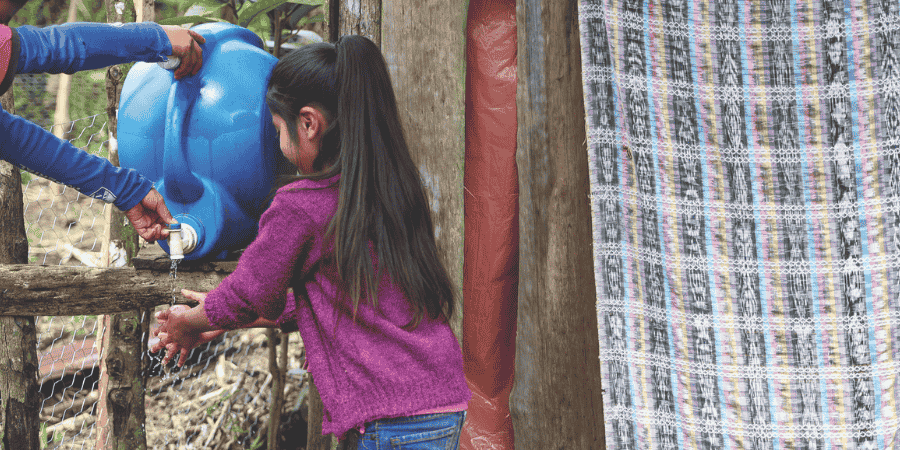
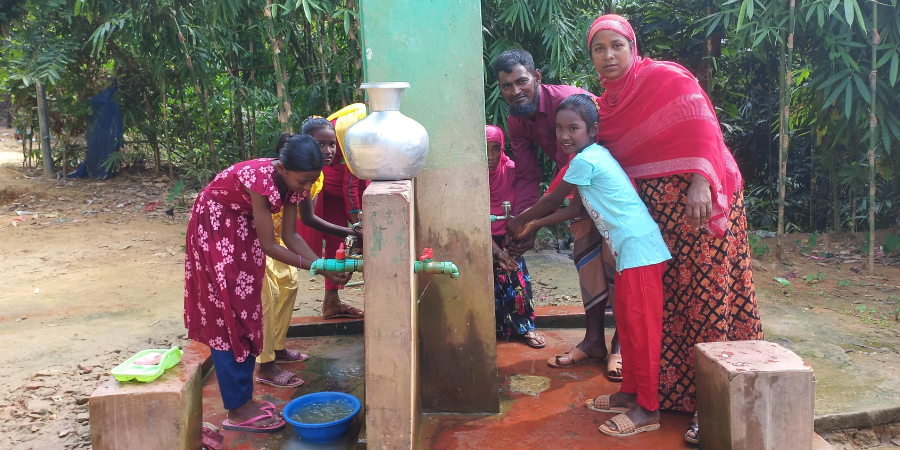
Halima is in Grade 3 and thriving! But this wasn’t always the case. Because of poor hygiene in her community, she used to fall sick often. Her community lacked toilets and access to safe drinking water. “I learned a lot about the importance of health and personal hygiene. Since FH installed latrines, showers, and a handwashing station, our family has been using the toilet regularly, washing hands with soap, and drinking safe water.” For Halima, water is a healthy future.
Water is… a Thriving Family
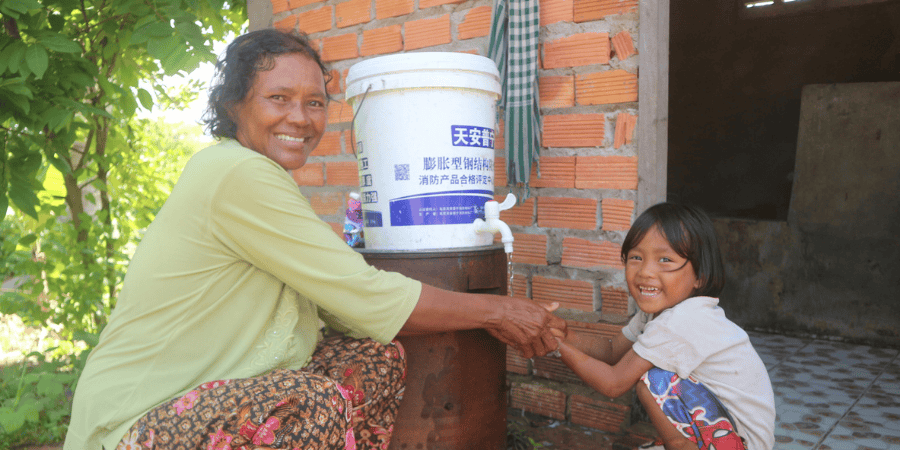
Yut’s family collected water from a pond for dishwashing, laundry, and handwashing. They woke at 4 AM to collect drinking water from distant wells. Waterborne diseases made them sick and caused financial strain. Receiving a water filter and water storage jar along with hygiene training allowed Yut’s family to focus on making an income and going to school. “Improved health enables me to support my son’s education and benefit our daily lives!” For Yut, water is a thriving family.
Water is… Education
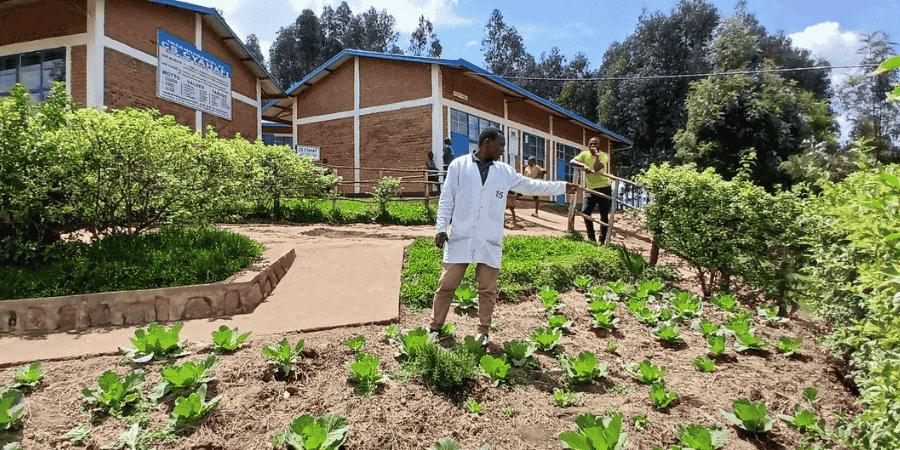
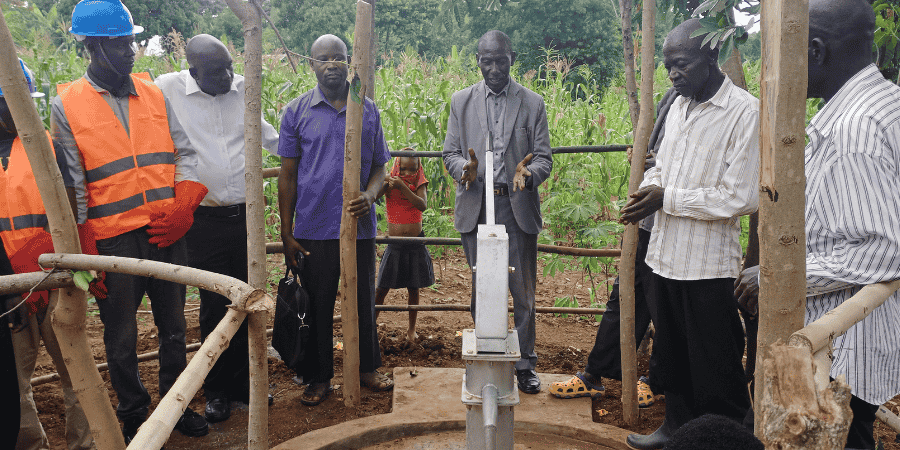
“Water is life!” exclaims the head teacher at Cyahafi Primary School. His students used to fetch dirty water from a wetland, delaying classes, exhausting children, and spreading waterborne diseases. But a new FH water point now gives 600 students safe, clean water right in the school! Twelve new latrines provide sanitation and a school garden grows irrigated vegetables. Students are healthy and succeeding! For the Cyahafi Primary School, water is education.
Water is… Food
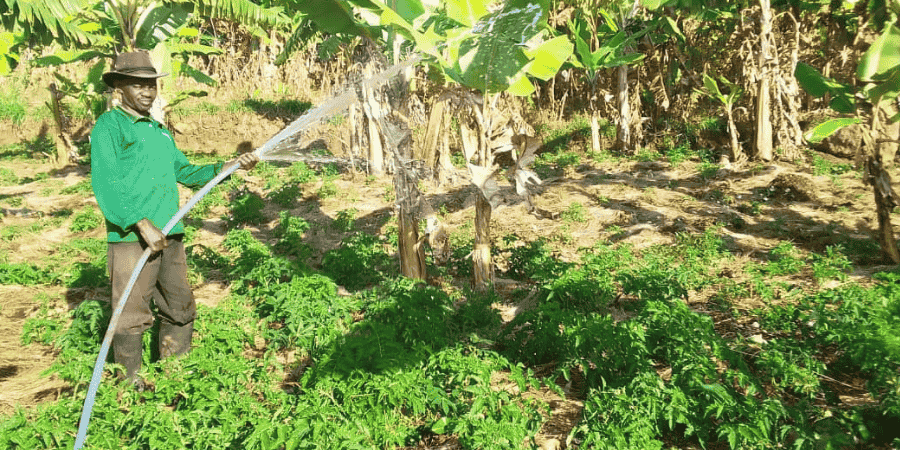
Gervais’ land went barren in the dry season. They lost food and income, and had to purchase water to grow anything. FH Rwanda built a water pump and irrigation system and trained Gervais to use it. His farm thrived and income tripled! “I now have access to water at home and can meet my family’s needs. I maintain a kitchen garden, allowing us to enjoy a balanced diet every day.” For Gervais, water is food for his family.
Water is… Strong Leadership
“I was losing the respect of my community. People were drinking contaminated water—it was a big blow to me as a leader.” Joseph is a 72-year-old retired teacher serving in local government in Bukiende, Uganda. He wanted to keep his promise to deliver clean water, but the district didn’t have the funds. Then Joseph worked with FH to drill two boreholes in his community. “I feel so blessed because the legacy of my family is now restored by water… My community is very happy, too—the money they spent on treating waterborne diseases is now invested in farming and school fees.” For Joseph, clean water is being a strong leader.
Clean water saves lives. You can give water and hope to families so their kids can grow up healthy and strong.
Are you overwhelmed yet? Each day, we wake up and brace ourselves for yet another wave of troubling news—cost of living rising, new tariffs in place, natural disasters hitting, and political upheaval.
We are living in incredibly uncertain times.
In addition, we are facing the devastating reality that the world’s largest funding agency is forced to suspend life-changing programs. This halts vital support for people living through some of their worst days. The disruption of international assistance is an added blow to hurting and vulnerable people who were already struggling to meet their basic needs. With projects paused and staff members dismissed, momentum is lost in breaking the cycle of poverty for suffering families.
In the midst of this, Food for the Hungry (FH) Canada remains unwavering in our dedication to our global neighbours and to leaders in partner communities.
If critical partners are forced to stop their work, thousands of families will lose their hard-earned gains and the necessary support to feed their children, keep healthy, and break the cycle of poverty. It will be a challenge for international teams to continue walking alongside families, leaders, and local churches as they navigate funding setbacks, shifting priorities, and the economic crises.
Already, I know our partner communities in Ethiopia are affected. I recently returned from a visit to that country, and heard from local leaders how these global crises are affecting daily life. The cost of basic needs has increased by as much as 30%. Conflict spreading in the north of the country has forced thousands of people to flee for safety, and a historic drought has left at least 11 million people without enough food to eat. Although we’ve begun to respond to this situation alongside our local partners, their outreach will be forced to pause as financial aid stalls.
The uncertainty is daunting, but in the wake of adversity, we continue to persevere in our mission to see children and families flourish.
We take heart in knowing we have these strengths as our foundation:
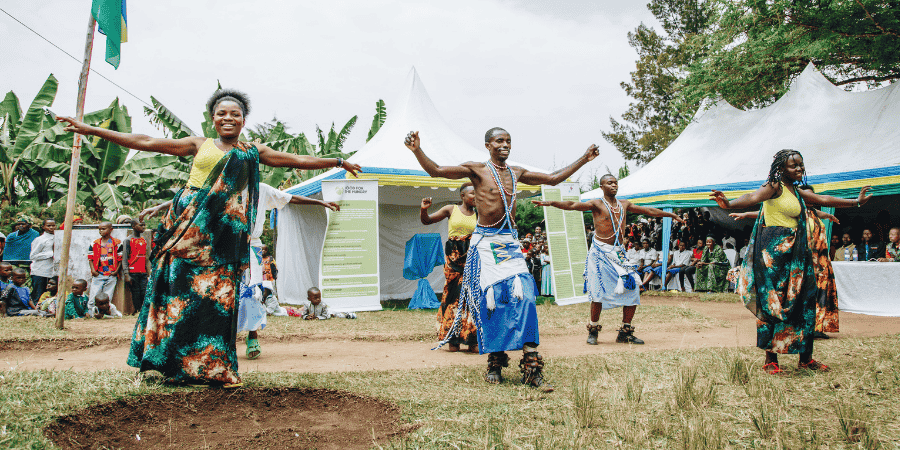
Community members from Busekera, Rwanda celebrate the joyful completion of a successful partnership with Food for the Hungry.
–1.–Long-term commitment to our community partnerships
Our 10-year commitment approach proves its value in times of crisis. Thanks to the generosity of our donors, we provide reliable support and work directly with local leaders and community members to maximise our impact. This makes us well-positioned to step up in several locations, and builds deep trust. We are known for keeping our promises. Over time, this trust transforms into real opportunities for families to break free from poverty.
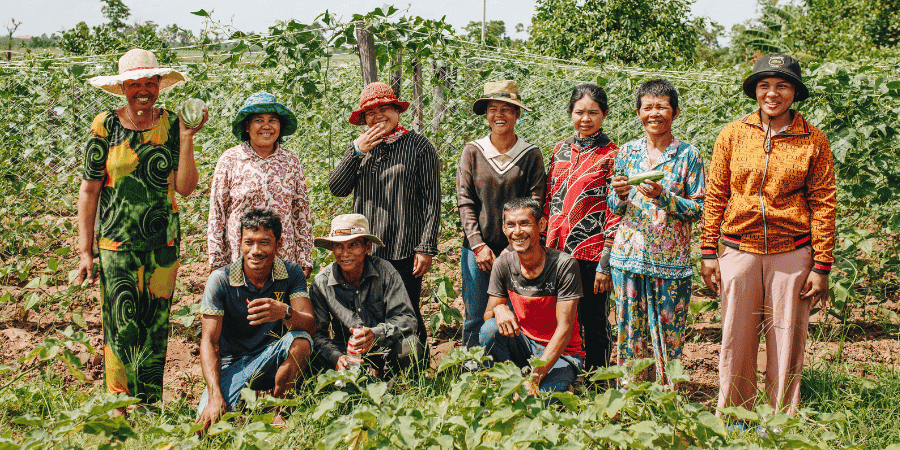
Through agricultural training, a group of farmers in Cambodia were equipped to grow thriving gardens!
–2.–Proven impact
The expertise and proven track record we’ve built have been made possible by the committed support of people like you. Looking back on 2024, for reminders, some key impacts include:
–––• 22 communities across Ethiopia, Bangladesh, and Cambodia reached their 10-year goals, and saw the
–––end of extreme poverty for thousands of families.
–––• In Burundi, 70% of savings group members reported improved ability to face economic challenges –
––– together we built resilience for these uncertain times!
–––• In Guatemala, 556 volunteers reached over 5,000 mothers with health or early childhood development
––– messaging improving children’s chances of avoiding life-threatening diseases.
Faithful Canadian supporters visit a group of mothers in Vichibala, an FH partner community in Guatemala.
––3.––Faithful, reliable supporters
Most importantly, we are strengthened by the consistent generosity of our dedicated donors. 90% of our outreach is funded privately by individuals, businesses and churches here in Canada. Our journey has always been shared with a global community of compassionate and generous individuals across Canada and the world. It’s this faithfulness and unity that will see us all through the challenges we currently face- together we can continue to make a difference.
Above all, we cannot forget, as an organization and network, that our greatest source of stability and comfort flows from our Creator. As Jesus reminded us, “In this world you will have trouble. But take heart! I have overcome the world.” (John 16:33).
These words offer profound assurance—no matter what obstacles we come up against—we are not alone. Through God’s promise to be our ever present peace, we can face each day with renewed courage.
As Canadians, where do we go from here? I do not presume to know how you are affected by unfolding events, but I don’t believe we can sit idly by and wait for the uncertainty to settle. Now more than ever, families around the world need to see their neighbours step up and show their support. Alongside other countries, Canadians need to lean into their responsibility to help those who are stuck in crisis. By rallying together, we can have a chance to build thriving and sustainable communities even when tensions are rising.
With your help, we intend to stand in the gaps anywhere we can. Let’s not be distracted and forget about our global neighbours and families in need. As caring Canadians, we can rise to the call to help. We can do this together.
I get it–everyone’s stretched a little thin right now, and that’s okay! We want to invite you into a few simple and meaningful ways you can stand with us.
Pray for those affected, here in Canada and in partner communities.
Share what’s happening, and invite others to step up with you.
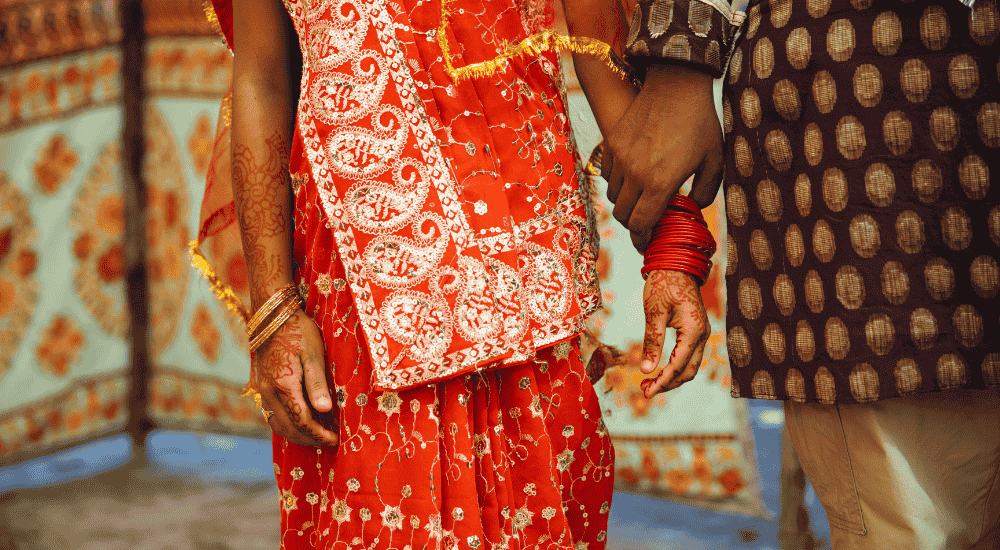
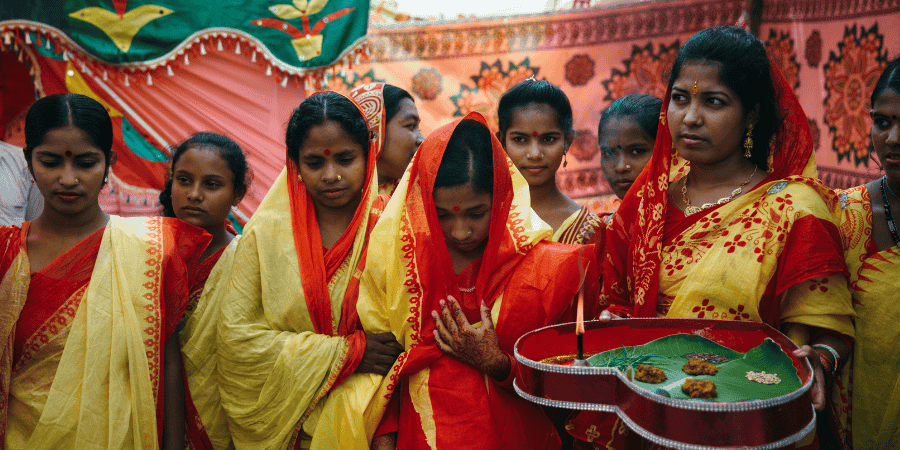
Globally, one in every five girls is married while she is still a child.
Child marriage threaten’s girls’ childhoods, health—both physically and mentally, and their access to education. And yet, many parents feel it is their only option.
Jesmin, a mother in Bangladesh, once felt this way. Her daughter, Keya, was struggling in school, and without money for a tutor, Jesmin couldn’t find a path forward. With no other options in sight, marriage seemed like the only answer to secure her daughter’s future. It would give her something meaningful to do—be a wife and mother—and a husband to feed and clothe her. A win-win, right?
And yet, Jesmin knew that pulling her teenage daughter out of school and marrying her to an older man could expose her to domestic violence, as well as physical and mental distress.
For millions of moms trapped in poverty like Jesmin, poverty leaves them with no real choice.. On top of the crushing weight of poverty, parents experience cultural and religious pressures to marry off their daughters. It feels almost impossible to say “No!” to child marriage.
The truth is, Keya is still a child, she cannot be a wife!
In reality, a marriage proposal for Keya was not a solution, it’s a life sentence.
When Jesmin joined FH Bangladesh’s Child Marriage No More project, she became one of 50 parents attending an awareness campaign. She then met bi-monthly with nine other parents to discuss stories that presented real-life scenarios related to child marriage.
Jesmin saw her own life mirrored in the stories, relating to the characters and empathizing with the situations they were in. Her mind began to change.
One story in particular struck home for Jesmin, convincing her that discrimination against daughters is wrong—equal opportunity should be given to girls and boys alike. The story showed how a girl like Keya needs extra support from her family and teachers, rather than giving up on her when she isn’t excelling in school. The story also showed the power of career-oriented technical education as an alternative to traditional education. Jesmin realized there were options for her daughter! Child marriage was not the only answer.
Soon after, Jesmin received an attractive marriage proposal for her teenage daughter. Jesmin stood strong. Equipped to say “No!”, she confidently refused it.
Through her Child Marriage No More parent group, she had gained the knowledge and confidence to do what was best for her daughter. Jesmin now plays an important role in ending child marriage in her community, advocating for teenage girls and persuading parents to say no to child marriage. Sweetest of all? Her relationship with her daughter is restored. She now treats her daughter as a friend, she tells us.
Today, through the support of Canadians like you, Keya is at home with her family, studying hard, and looking forward to a bright future.
With a gift today, you can help teenage girls say no to child marriage. A childhood can’t wait.
Can you imagine your Grade 9 daughter getting married to a man two or three times her age? Unfortunately, that’s a reality for many families around the world, as one in five girls is married while she is still a child.
The numbers are even more alarming in the world’s least developed countries—including six FH partner countries like Bangladesh—where the rate doubles to 40 per cent. This means four in ten girls are married before turning 18, and 12 per cent are forced into marriage before their 15th birthday. Often, to men twice their age.
It’s very fitting that the theme for International Women’s Day 2025 is “Accelerate Action.” It’s a call to do more, act faster, and work harder for gender equality worldwide.
Child marriage demands urgent attention. It’s a practice that strips millions of girls of their rights, education, and future.
Child marriage has devastating mental and physical consequences for girls and women worldwide. It robs them of their childhood, education, and future opportunities, reinforcing cycles of poverty and inequality. Ending this harmful practice is essential to achieving true gender equality.
You can fight child marriage through education and awareness. By understanding the root causes and impacts, you can take meaningful steps to support change for a better future.
Here are 10 facts about child marriage and how you can help:
—1.—650 million women and girls alive today were married before their 18th birthday
This number is continually growing as an estimate of 12 million more each year are married before they reach adulthood.
—2.—Married teens often get pregnant within their first year of marriage.
In Bangladesh, almost half of all child brides give birth before the age of 18. This has serious implications on their mental health as they often experience psychological trauma from entering adult relationships when they are young and vulnerable.
—3.—70,000 girls die each year from pregnancy complications or childbirth.
Becoming a child bride is dangerous. Pregnancy is one of the leading causes of death for girls aged 15 – 19 in developing countries like Bangladesh.
—4.—Child brides are more likely to suffer miscarriages and stillbirths
Underaged marriages don’t only have dire consequences for the girls, but also their children. Child brides are 50 per cent more likely to experience pregnancy complications, including miscarriages and stillbirths. Babies born to mothers under 20 are also at higher risk of low birthweight, preterm birth, and severe neonatal conditions. Child marriage puts both mothers and babies at risk.
—5.—Girls who marry before 18 are more likely to experience domestic abuse.
—6.—The larger the age gap, the more likelihood of violence.
Husbands are usually much older than their child brides, resulting in higher rates of domestic violence. The greater the age gap, the more likely girls are to experience violence. There is an imbalance in power between young wives and their much older husbands who often deny them their autonomy.
—7.—Child brides are at more risk of contracting HIV/AIDS
—8.—Child Marriage threatens girl’s access to education
Once married, girls often drop out of school and are expected to take on full-time household responsibilities. Stigma and gender norms often force them out of school, preventing them from finishing their education. Limited education restricts girls’ ability to acquire necessary skills, reducing their chances of entering the workforce and achieving financial independence.
—9.—To eliminate child marriage by 2030, global progress would need to be 20 times faster
According to data from United Nations Children Fund, progress is possible! In order to end child marriage by 2030 we’d need significant improvements in economic development, access to employment, and education at the secondary level for girls.
—10.—Bonus: You can help end child marriage!
Your gift allows FH to educate communities about its dangers, shift perceptions of girls’ value, and promote gender equality. We create peer support groups for girls, teaching them the importance of education, and provide vocational training for mothers to support their families, reducing the need to marry daughters off early. Helping kids stay kids.
You can put an end to child marriage. With a gift today, you can help teenage girls say no to child marriage. A childhood can’t wait.