In the lush, tropical community of Burukuru, Uganda, Easter is on the way.
Community members are hearing knocks on their doors. They open them to be greeted by cheery church members. Excitement reflects across their faces as the church members invite them to be part of fasting and reflection.
For members of Isaac’s congregation, Easter is not just an ordinary holiday; it’s a time to celebrate that Jesus conquered sin and death.
The heart behind these Easter activities is Reverend Isaac, who experienced the power of the resurrection in his own life.
When Isaac was young, he struggled with alcohol, and his neighbours saw him as irresponsible. His life was falling apart until he chose to follow Jesus. From that moment, everything began to change. Slowly, Isaac saw God transform his life.
He gained the trust of the church officials and began organizing events, which eventually opened the door for him to return to school. Isaac chose to study theology to become a reverend, but today his work extends far beyond preaching.
Isaac wants members of his community to understand the meaning of Jesus’ death and resurrection so that they can experience the same renewal and radical transformation. However, he feels many treat it like another ordinary holiday and do not fully understand its power.
“Easter is a season that shows Jesus’ purpose of redeeming mankind. Everyone has a different perspective on it. So, this season has a lot of meaning on earth. However, many churches take it as a normal thing.” Isaac says.
That’s why every Easter, he’s getting his neighbours involved in new ways to remind them that Easter is real, living hope!
Knocking on every door
Isaac began door-to-door outreach to inform as many members of the community as possible that they have redemption through Jesus.
Knocking on their doors, heinvited them to fast and pray together each Wednesday. Over time, many community members began to see Easter as more than a holiday. The same resurrection power that raised Jesus from the grave is also the same power that unites and revives Isaac’s neighbours.
Eating meals together
Many members of Isaac’s community understood church to only be important for big events or holidays.
In response, Isaac began hosting a Holy Thursday Meal to bring his neighbours together for greater reflection. Side by side over a meal, members of his community gather together to discuss faith, ask questions and reflect on the importance of Easter.
Now his community experiences a sense of shared accountability and solidarity to pursue a relationship with Jesus as their saviour.
Bringing the gospel to life
Through drama and skits, Isaac’s Sunday School plays out the resurrection story to convey the resurrection as personal, powerful, and available to all. They even include the role of doubting Thomas.
These live dramas help community members to understand the resurrection story in a real way, as the stories in the Gospel come to life in front of them. These conversations have helped spread the Gospel throughout Burukuru.
“Now we have over 40 members returning to God because they have discovered the significance of such a season. Members’ habits alter as a result, fostering harmony among the group.” Isaac explains.
None of this would be possible without the commitment to intentional community. Although our relationship with God is individual, our neighbours hold us accountable and God often uses them to speak to us.
As Easter approaches in Burukuru, what was once seen as just another holiday is now far more meaningful. Through Isaac’s leadership, the message of the resurrection is alive and personal.
Isaac’s story is a reminder that the power of the resurrection is meant to be experienced. Just like his community, we can pause to reconnect with God and to allow His transforming power to shape our lives.
Whether it’s through gathering with others, setting aside time for prayer and fasting, or reaching out to those around us, Easter offers an opportunity to rediscover the living hope found in Jesus.
As more people in Burukuru respond to that invitation, their community is becoming a testimony that Easter is not just a celebration of what Jesus has done, but an invitation into the new life He is still offering today, and to all of us.
Mothers are much more than just a comforting presence in a household. They are the anchor of their community.
Mothers farm through droughts, supplying food so their children can grow up strong. They propel their kids through obstacles at school, cheering them on through the challenges of young adolescent life. They innovate, always learning new skills to provide for their family.
Mothers support one another. Their resilience and determination are at the heart of community development.
In honour of Mother’s Day, meet three mothers from across the world who each sacrificed and persevered to create a better world for their children.
A Mother in Cambodia Moved Her Daughter Forward
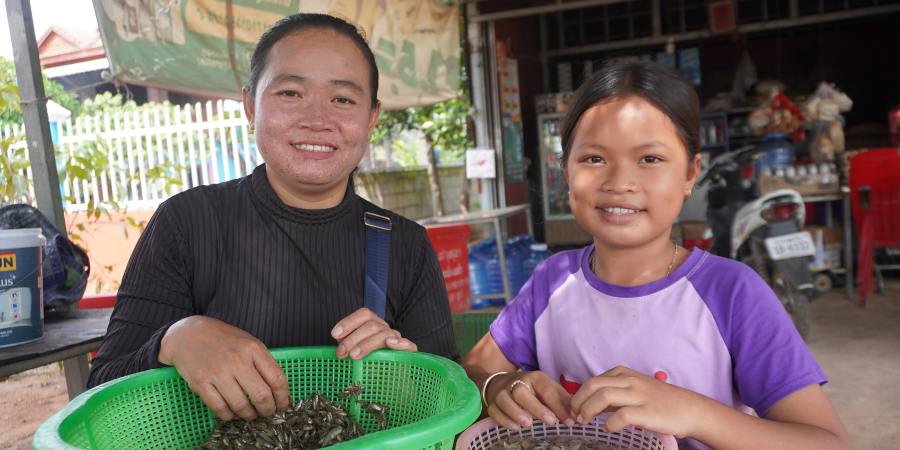
Saem lives in Cambodia with her 10-year-old daughter, Boungam. Like many mothers, Saem watched as Boungam struggled to make friends and take care of herself.
As many mothers do, Saem worried that her daughter’s lack of confidence would interfere with her ability to express herself and limit her future opportunities.
However, Saem encouraged Boungam to attend FH Cambodia activities at her school, where she learned about the importance of connecting with her community. Boungam learned how important going to school is. Saem witnessed with pride as Boungam grew in confidence and began to care for her health and hygiene.
Her daughter is now deeply involved in her community and even dreams of becoming a teacher!
“My daughter’s transformation gives me hope,” Saem beams with pride. “Our community is also improving—with stronger unity and a cleaner environment. Seeing these real changes in my family and those around me fills me with joy and strength for the future.”
With the support of her mother and her school, Boungam is no longer held back by fear. Instead, she encourages and supports other children around her.
A Mother in Uganda Learned With Her Children
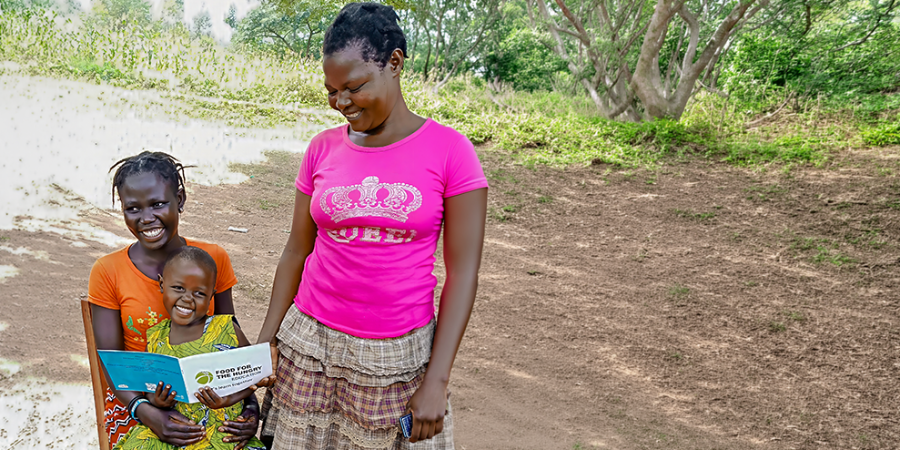
Barbra’s favourite part of the evening is when her children come sit by her side. Together, they open books, flip through pages, and step into new worlds of reading. But this wasn’t always part of her routine.
In Barbra’s community of Bukiende, in rural Uganda, women are often illiterate and focus on domestic roles. Because of this, Barbra, like many women in her community, didn’t know that her role in her children’s education could extend beyond dropping them off at school. She felt disconnected from her children’s schooling. She wasn’t sure what to do.
When Barbra began attending a group for mothers about how to support their children’s education, she received the clarity she needed about her role.
Barbra began to set aside time to read with her kids every day. Now, she even visits them at school and knows their teachers by name. Her relationship with her kids is stronger than ever!
Through agricultural training, her tomato business also began to take off. With this new extra income, Barbra invested in more books to read with her children.
“With FH Uganda’s interventions,” Barbra says, “many changes have taken place in the community, and these give a ray of hope for our children to succeed in education and transform our community. Caregivers are involved in the learning of their children. We want to empower them and make them self-reliant and responsible citizens.”
Mothers like Barbra, who are willing to learn new tools and invest in their children, lay the foundations of successful futures for their children.
A Mother in Bangladesh Protected Her Daughters
Tahera got married when she was 14 years old.
All of a sudden she was responsible for an overwhelming number of household activities. She struggled to balance the responsibilities of being a wife while still being a child herself.
Tahera felt her opportunities slipping away, and the dreams she once held for her future beginning to fade. None of the adults around her knew how much emotional pain and bitterness marrying so young would bring her.
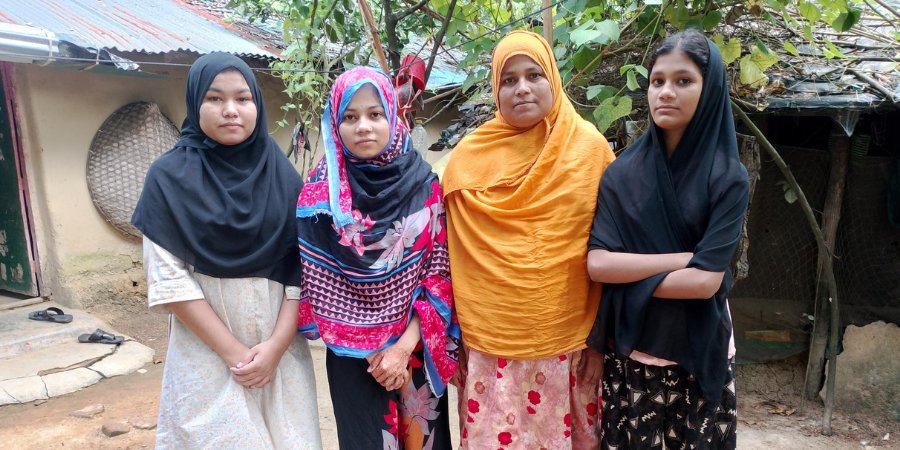
Years later, in April 2025, when the Child Marriage No More Project began in her community, Tahera immediately enrolled as a deeply committed member. Sitting in group meetings, she learned about the effects and legal consequences of child marriage. She had seen the effects in her own life and the lessons deeply resonated. With each meeting, she began to feel a new sense of responsibility to her children and community.
Today, Tahera has transformed from a survivor of child marriage to an advocate against it. She is determined that none of her daughters will be a victim of early marriage. She and her husband promised to prioritise their daughters’ education.
Today, her oldest daughter is preparing for university, while her other two daughters are on the way to completing high school marriage-free.
Tahera’s personal experiences are protecting her daughters and her entire community.
This Mother’s Day
Mothers like Seam, Barbra, and Tahera will learn anything and everything to give their children better lives and opportunities. When mothers are equipped with tools and skills, they invest them back into their families and communities. Gifts like Girls’ Education and Garden Tools helped Saem, Barbra, and Tahera build better lives for their children.
This Mother’s Day, you can honour your mom by supporting mothers around the world who are working just as hard to keep their children safe, healthy, and thriving.
Add impact to your Mother’s Day gift and browse the Gift Guide to find a gift a mom in your life would love.
This year, when you give a Mother’s Day gift, you’ll receive an exclusive card to share with a mother in ow a gift was made in her honour.card was created by local Canadian artist Katie Rodgers.
Give a Mother’s Day gift and order your card today.
Sign up today and learn more about becoming a Journey Partner below.
Can you imagine the destruction of your reality in a number of days?
Women like Awetash don’t have to imagine.
In Kafta Humera in Western Tigray, Awetash ran a successful restaurant and enjoyed raising her three children. Life was stable and she felt pride in building a future for her family. Then, when violence erupted, everything changed.
Shelling, looting, and devastating war crimes against women forced Awetash and her children to flee with nothing but the clothes on their backs.
“I was horrified and forced to leave everything behind,” Awetash recalls. “I had no way to feed or shelter my children. We walked for days. I was haunted by [the violence I saw].”
Along the way, Awetash endured deep physical and emotional trauma. Fear, exhaustion, and uncertainty became part of daily life.
This burden is something no mother should ever have to carry. Yet, two million people like Awetash and her family have been forced to flee their homes in Northern Ethiopia since 2020. After a fallout between the Tigray People’s Liberation Front and the federal government over political reforms, devastation spread throughout Tigray. Schools, businesses, factories, and 79 per cent of health facilities were shelled, destroyed, and looted. The conflict left at least 2.3 million in need of assistance.
For the women and girls in Tigray, the impact was especially devastating. An estimated 43 per cent of women in Tigray experienced at least one form of sexual and gender-based violence (SGBV). Many were forced to make impossible choices to survive, leading to risks of sexual exploitation, infectious diseases, and SGBV. The upheaval also shattered the childhoods of many children. With deepening poverty and constant danger, some families turned towards child marriage and labour out of desperation.
When Patty-Leigh Thielmann, FH Canada’s VP of International Programs, spoke with women affected by the conflict, their stories echoed one another.
“They talked about how they have experienced difficult things,” Patty-Leigh recalls, “Like having to flee their homes in the middle of the night. Many women’s husbands were killed or simply disappeared. It was a traumatic time, and they are still not able to return to their original homes.”
Additionally, mothers also bear the disproportionate burden of walking long distances to collect contaminated water from damaged water systems. This has led to cholera outbreaks throughout many communities, adding extra devastation to already tragic circumstances.
But this is not the end of the story.
Alongside Global Affairs Canada (GAC) and FH Ethiopia, Food for the Hungry Canada is restoring hope for women and girls in Northern Ethiopia. Together, we have implemented the Ethiopia Humanitarian Response project to provide healing, resources, and a brighter path forward.
We began by listening. Women and girls shared what they needed most to feel safe, healthy, and hopeful again, and were invited to fill leadership roles. The project restored access to clean water, built safe sanitation facilities, and created friendly spaces where women could gather without fear.
For women like Sielay, this support was life-changing.
As a single mother with a visual impairment, Sielay faced overwhelming challenges. Before connecting with FH Ethiopia, she and her daughters drank contaminated water shared with animals, which left them constantly sick.
Then Sielay found an unexpected opportunity: a job managing a newly built well installed by The Ethiopia Humanitarian Response project. With access to clean water and a steady income, she felt hopeful again!
“Now I can send my daughters to school, and I can pay my rent,” Sielay says. “Having this job has given me the opportunity to interact with people, especially other women, and to share my feelings with them. For the first time in many years, I feel at ease in my mind. I feel happy. Thanks to God and FH Ethiopia, I finally feel at peace.”
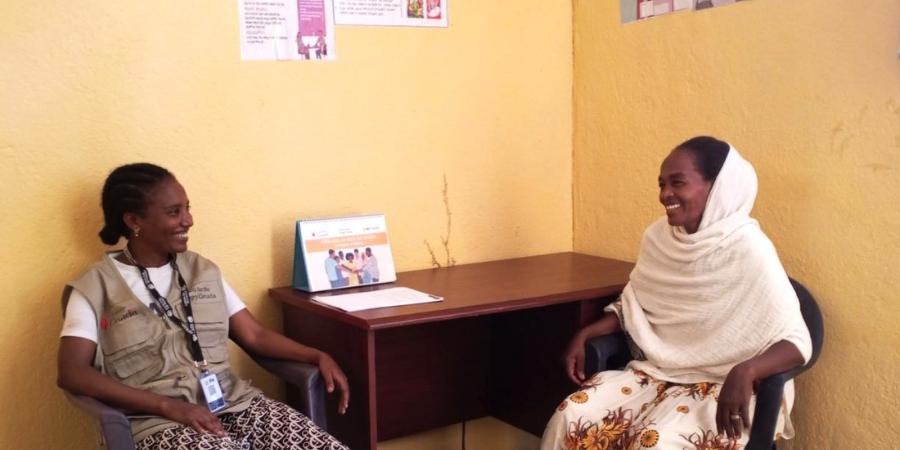
For both Sielay and Awetash, healing required something just as essential: an opportunity to begin again. After arriving at an internally displaced persons camp in Hitsats, FH Ethiopia staff secured Awetash a spot at a safe shelter near a Women and Girls Friendly Space, which changed everything.
Awetash received counselling, attended psychosocial support sessions, and received life skills training, which helped her regain strength and resilience. Through these programs, she realised she didn’t have to embark on her healing journey alone. The support she received helped her take the next steps toward a new, restored life. The Women and Girls Friendly Spaces have provided a place of hope and renewal for more than 7,700 women and girls like Awetash to find safety, healing, and freedom.
Awetash receiving support at a Women and Girls’ Friendly Space.
Thanks to these spaces, Awetash can live with the power of knowing that the trauma of her past does not dictate her future.
“The relaxation sessions taught me to calm my anxiety. I learned to manage the pain of my past and the challenges I face now. It gave me tools to live again,” Awetash says.
She now has hope for herself and her family, and even dreams of a better future!
From clean water to trauma support, Awetash and Sielay’s stories highlight how these resources don’t just meet immediate needs, but they also bring healing to communities as they rebuild a life after the devastation of war. Alongside the Government of Canada and FH Ethiopia, women and girls can restore bright futures in the midst of recovering warzones.
In just 60 seconds, you can help protect a vital space for women and girls. Complete the quiz and a generous donor will give $5 to FH Canada’s work with women and girls in Northern Ethiopia. Be part of restoring safety and rebuilding lives today.
I began the day excited to travel through Kabarore, Burundi, especially anticipating the first stop of the trip. The FH Burundi team had kindly arranged for me to meet Hadjala, the twelve-year-old girl that I had been sponsoring since I joined FH Canada in 2023.
As we drove up to the house, neighbours stopped what they were doing to see what was happening. In the rural community where Hadjala and her family live, visitors don’t come through very often. Our arrival caused a bit of a stir.
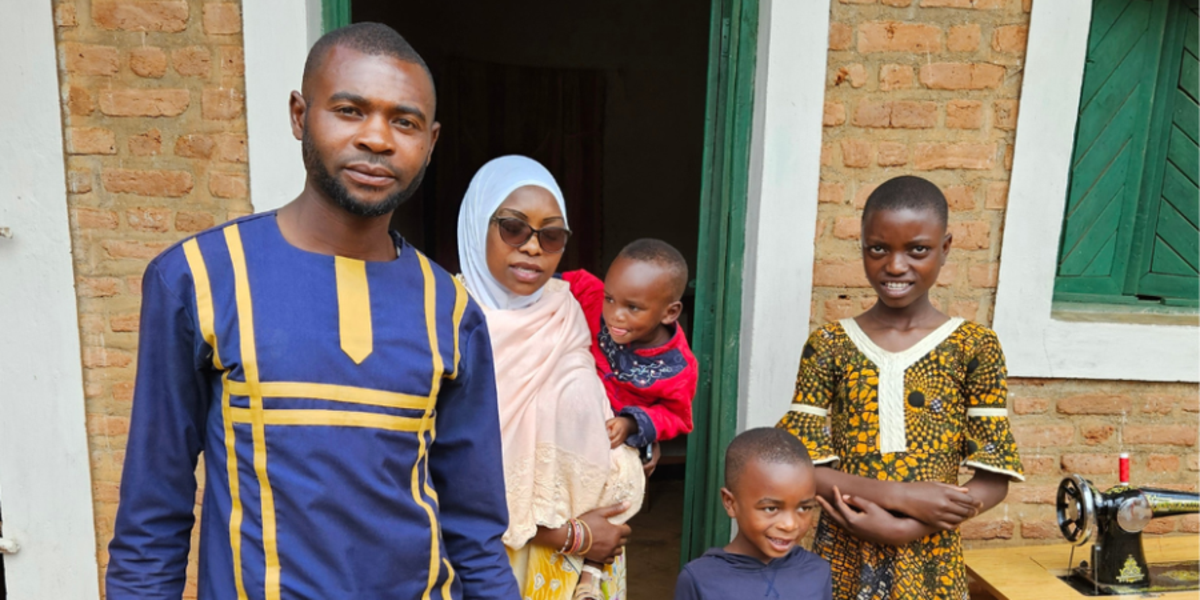
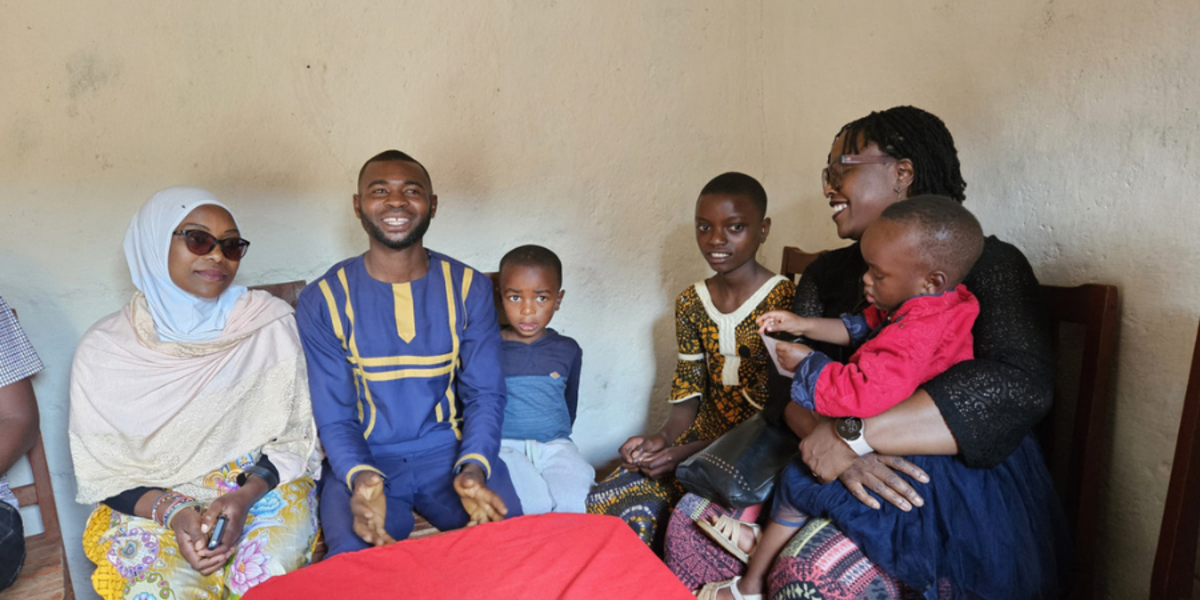
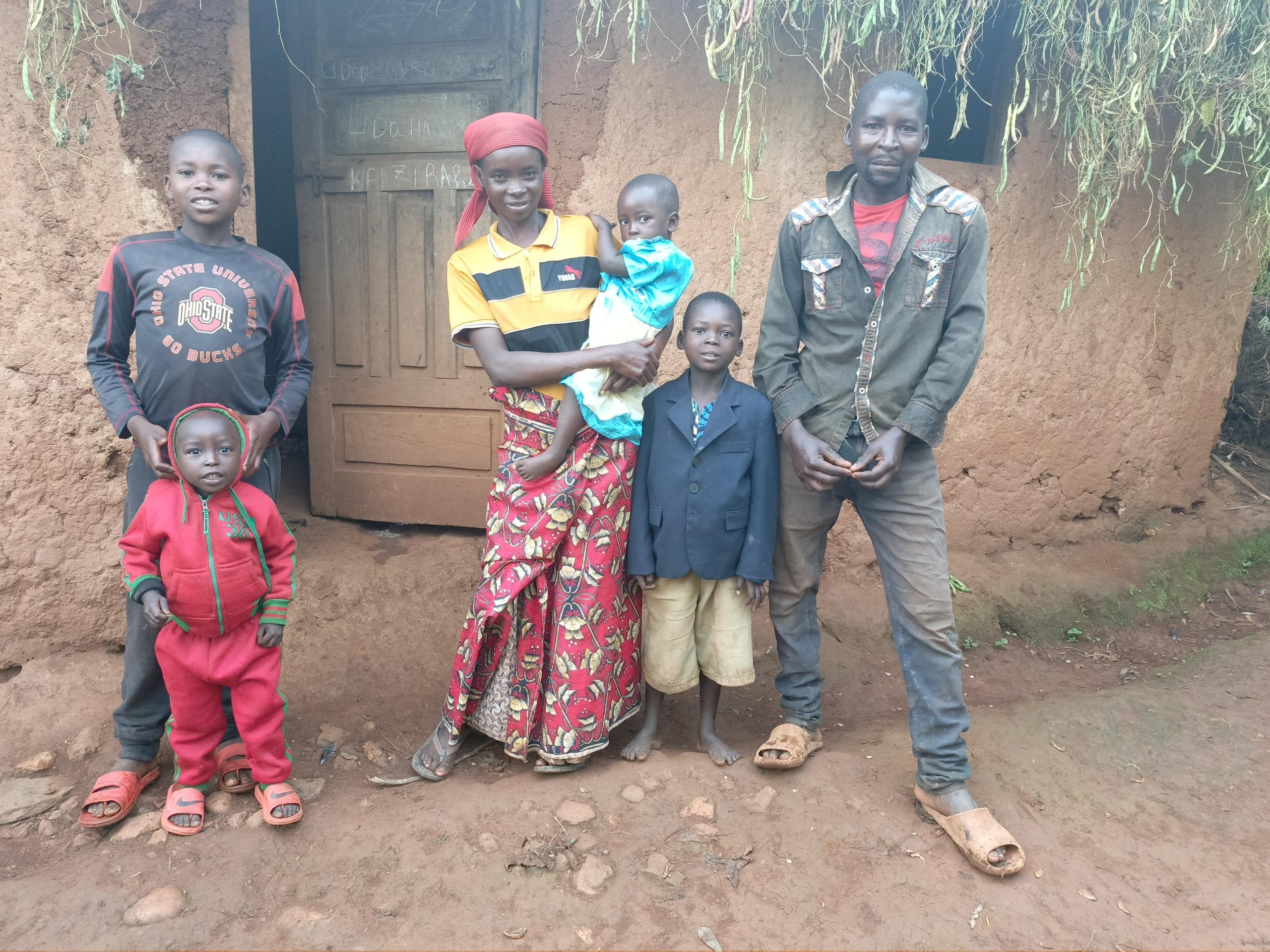
Finally, we came to a stop at the house where the family was waiting at the door near a sewing machine. Hadjala’s dad, Manariyo, stepped forward to introduce himself and the family. Hadjala saw me before I saw her and ran towards me to give me a big hug. In that moment, any nerves I felt leading up to this visit vanished. Hadjala’s mother, Harerimana, beamed at me and, with a wave of her arm, invited me into their home, balancing her baby girl, Izere, on her hip.
As we stepped into the living room, furnished with a couple of chairs and a table, her younger brother, Abdul, stared with innocent curiosity. Through translators, we talked slowly and learned more about each other.
Hadjala sat close as her parents explained how being part of FH initiatives had helped their family. After a reminder from mom, Hadjala went into another room and came out with a gift. It was her carefully written letter, telling me how well she’s doing in school! Instead of sending the letter through FH as usual, she held on to it until she could give it to me in person. Reading the letter in her home gave me a fuller picture of who Hadjala is: a confident, respectful young girl who takes pride in her school work, with loving parents supporting her success and working hard to give their children the best possible life.
I spent the rest of the day visiting some of the community projects in Kabarore supported through FH Canada. One of the highlights was a youth co-operative business created for and by youth in Kabarore called Terimbere Rwaruka, which means “Youth Advancement”. The young women and men started a sewing co-op, selling made-to-measure clothes to people in their community and a neighbouring town on market days. There was an air of excitement and pride as we stepped into the co-op building to hear the young people’s stories.
As I entered the co-op building, I looked up, and there was Hadjala’s mom, Harerimana. That’s why there was a sewing machine set up outside her house this morning! Recognizing each other, we embraced, and I couldn’t have been happier to see how my monthly donation had supported this mom in providing for her children. We sat down together and listened to young people tell their stories.
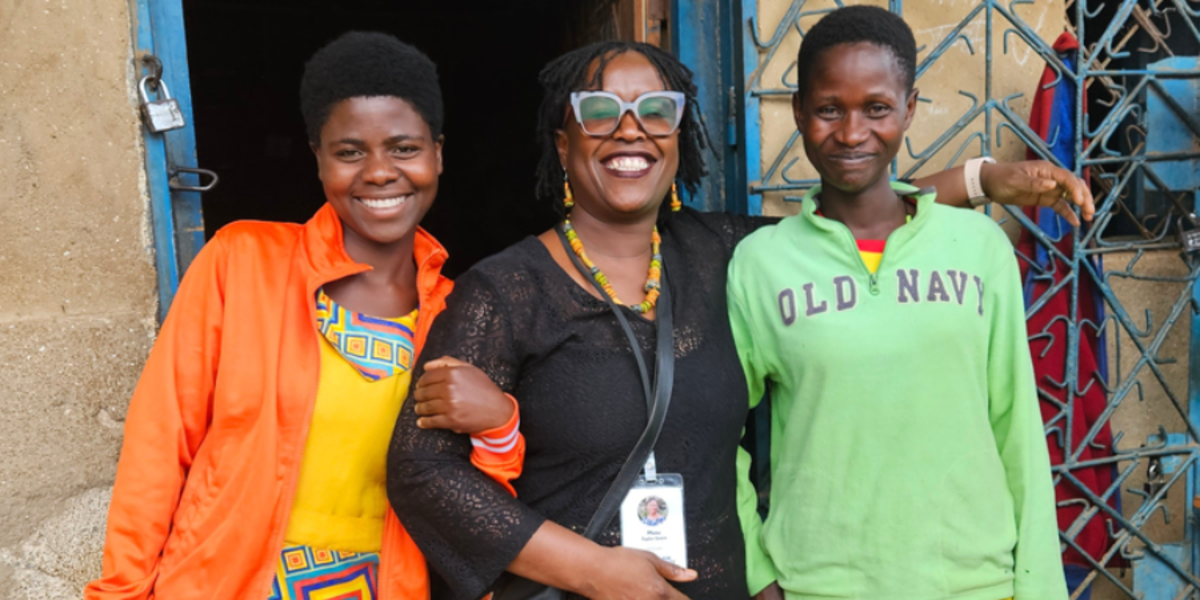
We listened as Evelyn, a 27-year-old woman, shared that she had dropped out of school because her family couldn’t afford the fees and had been working as a day labourer, barely making enough to survive. She was integrated into the youth program in Kabarore and given a sewing machine from the FH Canada Gift Guide. Eventually, she used the money she earned from sewing to buy two rabbits and rent an avocado tree from a friend. She took on the risk of farming in uncertain weather conditions and doubled the money she invested. Today she owns a pig, two goats, and ten rabbits, and is actively helping other youth in Kabarore!
Evelyn in Green, 22 year old Belyse Mahoro in the orange jacket.
As we drove away, I couldn’t help but wonder about other children in the community. My mind went to children who are registered in our program, but not sponsored. In each of FH Canada partner communities, we have more children registered for sponsorship than we have Canadian sponsors. Every registered child participates in programs that strengthen their families, school, and communities through clean water projects, nutrition programs, and healthcare. But not all children have the opportunity to connect with the supporters in Canada who are supporting their journey.
What I understood more clearly from my visit that day was that my sponsorship supported programs that strengthen Hadjala’s family, school, and community. FH Canada has completed our ten-year partnership with Kabarore, and I am confident that Hadjala will not only have the support of her parents, but also mentors like Evelyn. At FH Canada, we have always worked to ensure communities are not dependent on us, so that they can continue the work with children and families after we exit. My role in Hadjala’s life was to help strengthen her home, school, and community so that she lives in an environment where she can thrive!
In 2026, FH Canada will start our own journey to the next 100 community partnerships. We are moving forward with the learnings from the last thirty years of emboldening 100 communities, like Kabarore, on their pathways to more hope-filled futures.
Instead of child sponsorship, we are inviting you to be part of transforming communities as a Journey Partner. We will be investing even more deeply into local leaders and communities through new partners embedded in communities who may not have the resources to support child sponsorship. The reality is, there is a cost to running child sponsorship. That cost will now be invested directly into community transformation.
I am making the same monthly donations as always, but now as a Journey Partner. I invite you to join me.
My giving now matches what child sponsorship has always been about: transformation that benefits many children, youth, and families in FH Canada partner communities. I receive updates on children like Hadjala and from young people like Evelyn. I see the impact of farmers’ co-ops on fathers who can finally provide well for their families. I hear inspiring stories about the nurse who can look after her patients with the proper equipment. I invite you to join me in being part of the powerful journey of community transformation.
Sign up today and learn more about becoming a Journey Partner below.
As we come to the end of 2025, FH Canada is celebrating another milestone! We’ve officially completed 100 partnerships with communities around the world.
100 communities in Ethiopia, Haiti, Peru, Burundi, Bangladesh, Rwanda, Guatemala, Burundi, Cambodia, and Uganda are thriving. All thanks to the support of over 20,000 Canadian individuals, churches, and businesses who’ve given faithfully for over three decades.
Together, we’ve walked with communities as they pursue their visions for a stronger future. We’ve listened, supported local leadership, and stayed long enough to see stability take root. We’ve seen what’s possible when partnership is patient, consistent, and grounded in dignity.
– In Svay Leu, Cambodia, families now have enough to eat 99% of the year
– In Busekera, Rwanda, 97.8% of children are in school by age 7
– In Mbale, Uganda, 91% of households now have access to clean water
– In Busekera, Rwanda, 99.5% of families own a farm animal
Now, we are ready to begin the journey to the next 100 partnerships.
With the knowledge from the last thirty years, we are making an exciting shift to how we partner going forward.
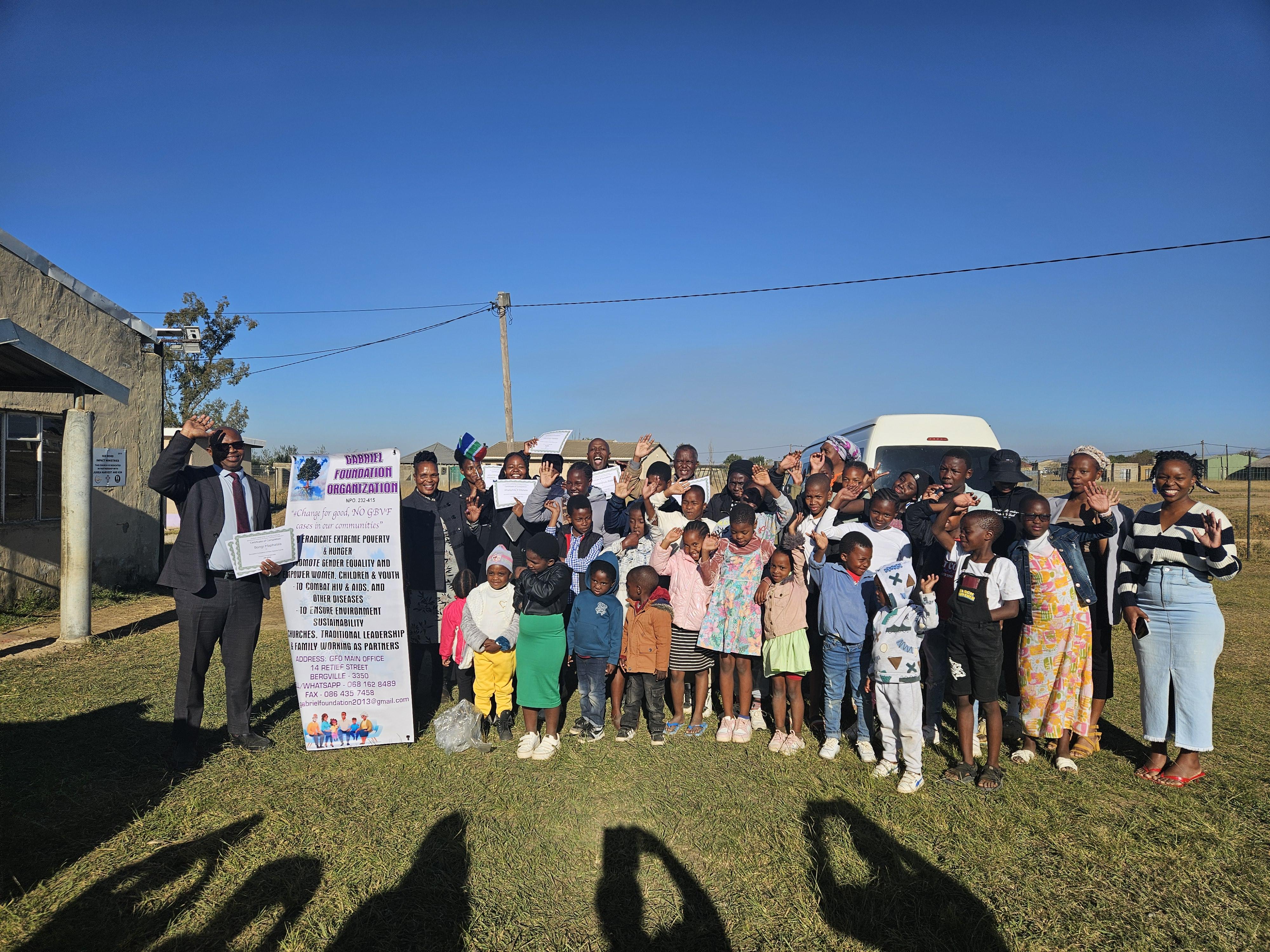
In May 2025, I had the privilege of visiting Bergville, South Africa, to see the work of the Gabriel Foundation. I had heard about their work through the Food for the Hungry International Federation (FHIF). The Gabriel Foundation is part of a network of local organizations supported by FHIF with training and small grants to support community transformation.
The foundation was founded by a woman named Monicah Zanele, with the support of her family. After years of working for an international NGO, Monicah knew she wanted to do things differently and wanted to transform her own community of Bergville, KwaZulu Natal. As we drove by the high school, Monicah proudly pointed out that she had attended the school in her youth. She wants today’s youth of Bergville to have more opportunities than her peers did. Unemployment in KwaZulu Natal sits at about 48 per cent, and alcoholism and domestic violence are major social challenges in the community.
As we moved through the community, Monicah was clearly well-known and loved. She was greeted by name and conversed easily as a friend. Monicah started her work in Bergville by introducing New Nations Training, developed by FHIF, to in churches and community groups. The training is designed to help people see what God has already provided and open trainees’ eyes to the possibilities that already exist in their communities.
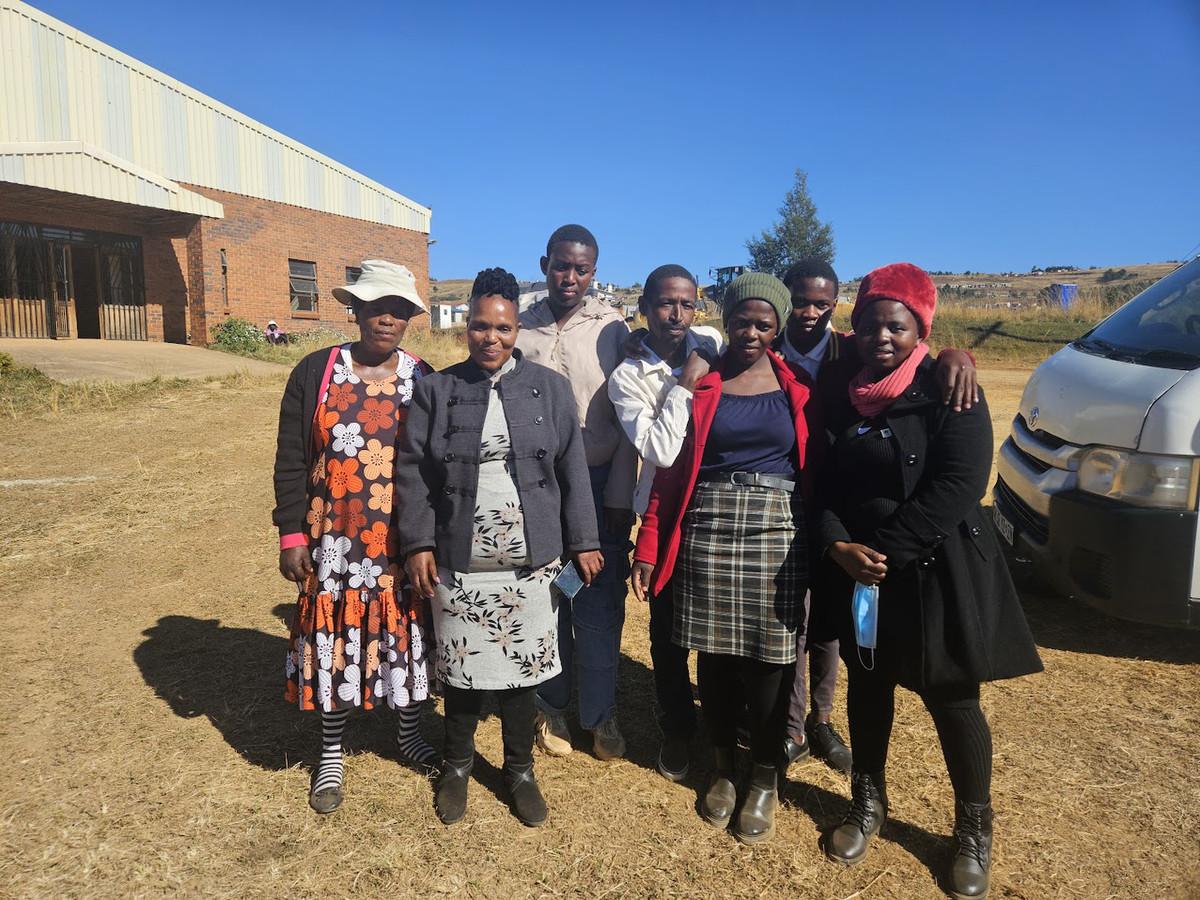
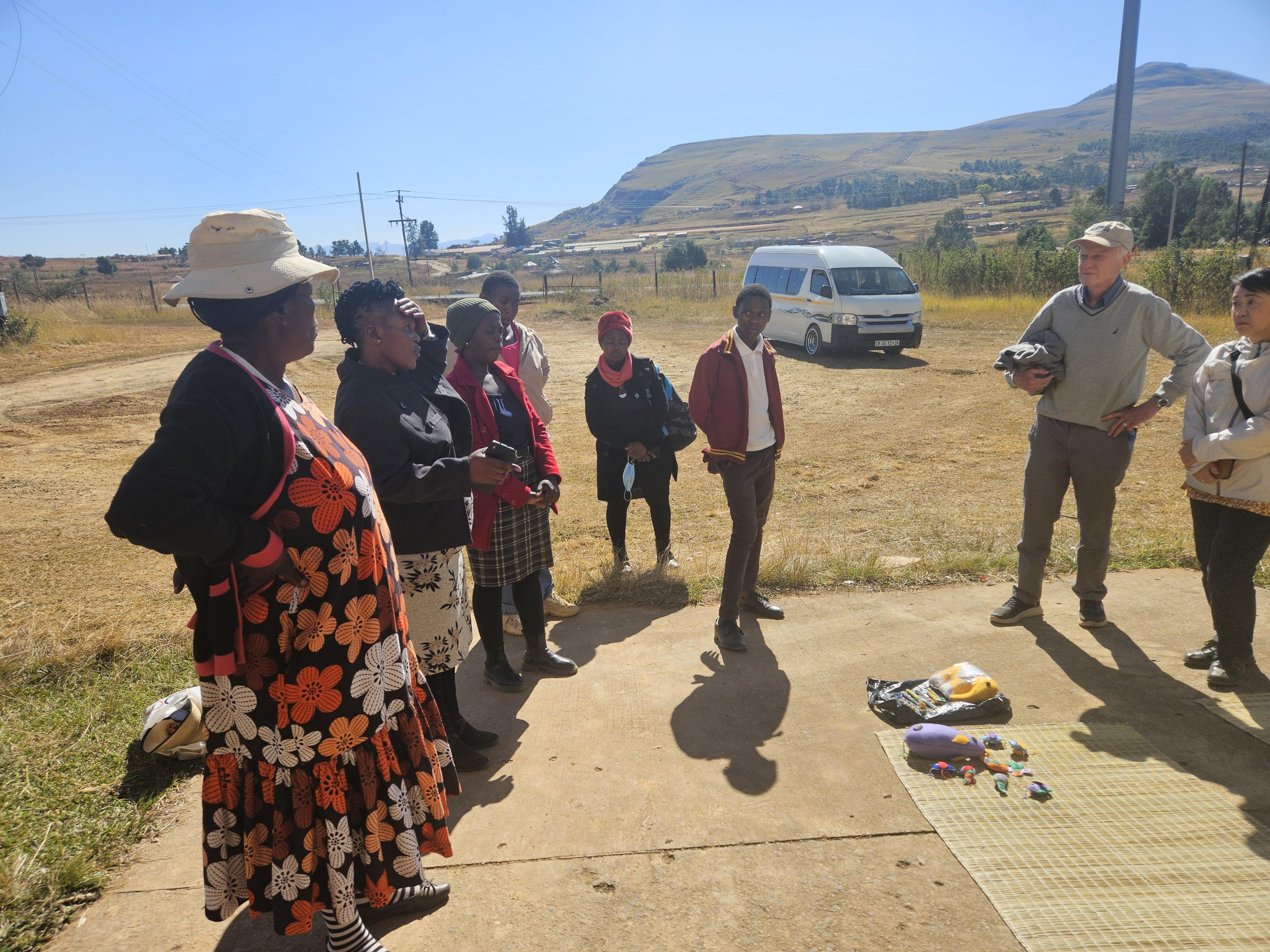
Monicah Zanele (second from left in the grey jacket) founder of The Gabriel Foundation with members of Bergville Comunity including Cebisile on the far left.
In addition to changing mindsets, Monicah is also working with women and traditional leaders in Bergville to address the issue of domestic violence. She set up a women’s shelter to help women escape abuse and build better lives for themselves.
During the day in Bergville, I heard many stories of how the training and support had changed people’s perspectives and confidence. One of the women I met named Cebisile learned to weave from her grandmother. She specialized in making traditional mats, called Icansi, from seasonal grass. Icansi are used in South Africa for many purposes and are in demand for modern decor and traditional wedding gifts.
Cebisile (left) showing us her icansi and other handmade crafts and explaining their importance in South African cultures.
Cebisile not only knew how to weave, but also understood the planting and harvesting cycle of the particular grass needed to produce the valuable, authentic Icansi. Cebisile is now making a better living selling Icansi and other crafts. She is also part of a community-based co-operative garden started with others who took the New Nations training. They sell the produce for income, and the co-op has strengthened community relationships and improved nutrition for their children.
Stories like these demonstrate that our model of community-centred development is effective across the world through local organizations. We realize we can do even more through partnerships that build on the strengths that donors have supported for years:
– Local leadership shaping the direction
– Partnerships starting with an end in mind—putting dignity before dependency
– Practical support rooted in what’s already growing
These foundations will stay at the centre of who we are. For example, knowledge of the value of Icansi and the inputs needed to produce it are indigenous to Bergville; assets within a community that we might miss as outsiders. This is why leaders like Monicah, with knowledge of the community resources, are better placed to see the potential in partner communities.
Over the past three decades, we have seen growing evidence of stronger outcomes when local leaders are supported and strengthened.
The Gabriel Foundation works with local church leaders to change mindsets and set the children in Bergville on a pathway to a more hope-filled future.
That is why, starting in 2026, our next 100 community partnerships will be with organizations like Gabriel Foundation and leaders like Monicah who are already embedded in communities and who will be there when we exit—as we always do.
FH Canada’s history of long-term holistic community development provides clear evidence that this approach leads to sustained improvements in child well-being, food security, education, and livelihoods. Independent research consistently shows that development efforts led by capable local organizations create deeper community ownership, more sustainable outcomes, and faster adaptation to changing needs.
The transition to new partners doesn’t change the model—it strengthens our ability to apply what we’ve learned over decades of effective practice and reflects the growing evidence that locally-led work delivers stronger, long-term impact.
Over the next five years, we have set a goal to impact 600,000 people each year through investing in local leaders around the world. We will achieve this with support from you and the community of Canadians who walked with us to reach the first 100 communities.
We’re excited to be on this path, and I invite you to join us as we begin the journey.
With each gift, you’re transforming the lives of children, families, and entire communities. Your generosity is strengthening education, growing nutritious food, improving access to clean water, and more!
Here are 3 things your Gift Guide donation makes possible:
Beatrice has seen her students excel in reading and writing thanks to new story books for her classroom—a true reason to celebrate!
1) Your Gift Guide donation provides kids with new opportunities to unlock bright futures.
Can you imagine going to school without books? What about teaching without them? Beatrice, a teacher in Bukiende, remembers this reality. But everything began to shift when FH launched the “Let’s Learn to Read” project.
The most transformative part, Beatrice says, was putting books directly into children’s hands. FH Uganda distributed 2,000 books for schools and 600 for families. Written in the local Lumasaaba language, they gave children stories that felt like theirs.
Beatrice immediately saw the impact. “Kids are more confident and excited about learning. I’ve seen a big difference in their ability to read and understand stories.”
Across Bukiende, reading is becoming a part of family life. Parents are making time to read at home, visiting classrooms, and creating space for learning. Books at home give children the chance to practice, imagine, and grow—regardless of their economic background.
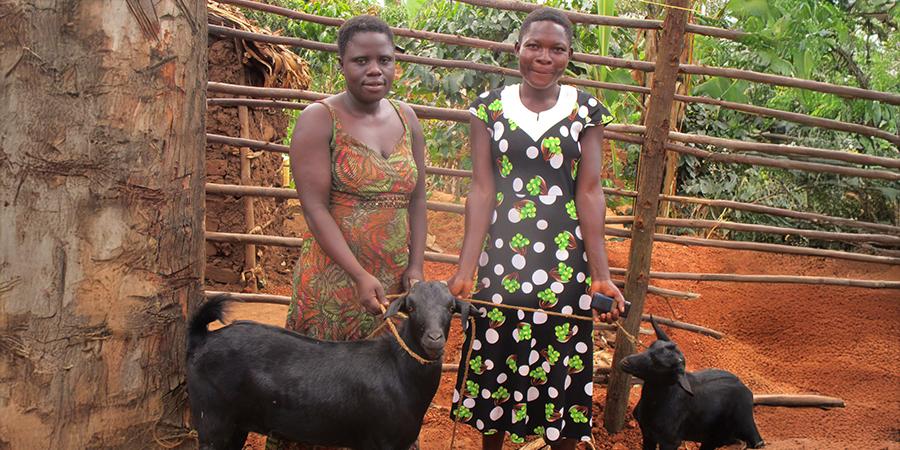
Monica’s goat provided a steady source of income and hope for her family.
2) Your Gift Guide donation helps reduce food insecurity and break the cycle of poverty.
When COVID-19 hit Uganda, Monica and her husband were overwhelmed with challenges. Her husband could not work which impacted their livelihood and their kids were always hungry.
That is until Monica received a Sturdy Goat, thanks to generous Gift Guide donors. Their goat provided a steady source of milk and income, and helped to reduce malnutrition throughout the community!
“When FH gave us our goat,” Monica recalls, “Our children had consistent milk which greatly improved their health.”
Not only were her children thriving but FH Uganda also empowered Monica to become a community leader and advocate for education! Today, she dreams of helping other underprivileged members of her community.
Monica’s Sturdy Goat offered her family more than milk. It empowered her to provide for her family and community!
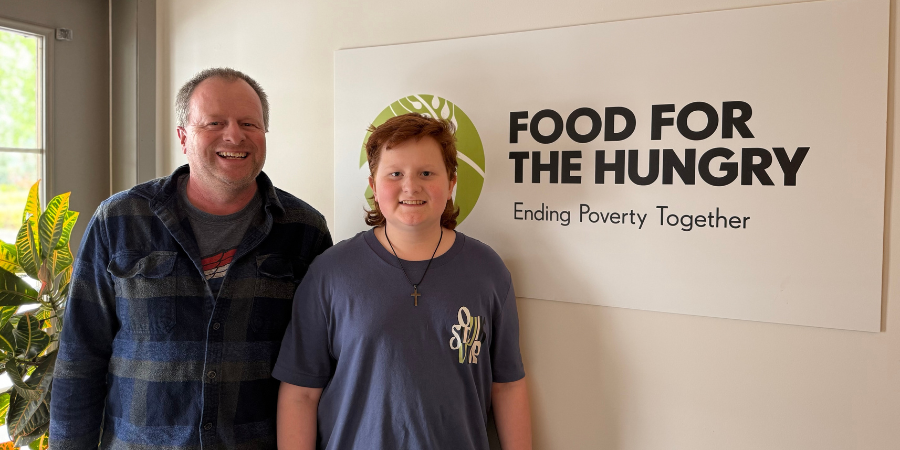
Luke’s used creativity and style to bring hope to families around the world—his mullet raised enough funds to donate a Sewing Machine to a family.
3) Your Gift Guide donation inspires generosity in the next generation.
At 13, Luke sported a mullet—and an idea. What if his haircut could make a difference? He challenged his Instagram followers to help him raise $150 in exchange for the haircut.
Luke raised $260 and donated the money towards a Sewing Machine through the Gift Guide. Why? Luke explained, “It helps multiple generations. A family can start a business, then they can afford to send their kids to school. It’s the kickstarter for many good things.”
Generosity runs in Luke’s family. Each Christmas, his grandparents, who travelled to Cambodia with FH, invite him and his sister each year to choose a Gift Guide donation.
Now, his haircut—and the sewing machine that it made possible—will echo that legacy, helping another family break the cycle of poverty.
Together, these stories show that every Gift Guide donation creates ripples of hope—transforming lives, strengthening communities, and inspiring others to give. Your generosity is building a world where every family can thrive.
Can you remember a time in your life when someone came alongside you to walk with you through a struggle?
Maybe it was a friend constantly comforting you in the midst of grief. Perhaps a mentor came alongside you as you navigated a new challenge in your career. No matter the scenario, support of community brings hope, restores dignity, and reminds us we are not alone.
Now imagine being that person for someone else. What if you journeyed alongside someone in the same way you once received support?
We are here to invite you to do just that.
Just as we need people to walk beside us through challenges, families and communities need a helping hand on the journey out of poverty. Without compassionate people willing to walk alongside communities for the long term, families are caught in inescapable and devastating cycles.
Eric’s Journey Out of Poverty
Eric, a young boy in Burundi, knows this well. His family used to rely on outdated farming methods, and their land didn’t produce enough food to eat. Hunger led to chronic sickness, isolation, and despair. Eric’s father vividly remembers the hardship:
“Physically, we were weak and often ill due to poor hygiene, sanitation, and nutrition. Emotionally, we felt insecure because of food scarcity and the constant illnesses in the family. Socially, we were isolated, as our interactions with other community members were very limited. Spiritually, we didn’t see God as our protector in our daily lives.”
But their lives began to transform when they invited FH to walk alongside their family.
FH empowered them with tools and steps to overcome poverty. Through Cascade training groups, Eric’s family learned about basic practices for staying healthy, like building latrines, using compost, starting a kitchen garden, using mosquito nets, drinking boiled water, and washing their hands. Eric’s father said:
With time, the cycle of poverty was broken. Over around ten years of partnership with FH, they were empowered with skills and tools to improve their livelihoods. Their community, too, received resources like clean water, better education, and improved local leadership. Today, they are thriving—and eager to walk alongside other families, just as they themselves were helped.
“My personal life has changed tremendously because now I have a clear direction for my family’s development,” Eric’s father shared. “Physically, all family members are healthy thanks to the behavioural changes we’ve adopted through FH. Emotionally, we are balanced because we now live with hope of producing and developing, whereas before, we were in despair. Spiritually, we have made God the center of our lives; we praise Him, thank Him, and ask for His protection in all that we plan and do.”
What’s different about Journey Partners?
What makes Journey Partners unique is a long-term focus. Journey Partners help communities thrive emotionally, physically, and spiritually so they can become self-sustainable through consistent support. Their monthly gifts help FH walk alongside families like Eric’s and provides training to boost food security, education, clean water, and drive community-led change.
But the journey out of poverty hinges on consistent support that communities can count on. That’s where Journey Partners come in. They’re a global community of monthly donors who provide reliable support communities can count on, no matter what crises come their way.
As a Journey Partner, your monthly commitment gives us the confidence to make long-term plans—plans that walk families out of poverty and into possibility.
Take it from Bill, one of our first Journey Partners:
“My wife and I value FH’s Journey Partner program because it puts our gift where local leaders see the most potential for real transformation. This community-needs approach is wise stewardship which helps the community at large. And monthly giving is so easy. We set it up and payments go out faithfully without requiring us to remember. Thank you, FH, for doing community development well!”
As a Journey Partner, you can join passionate Canadians like Bill to help families move from poverty to possibility. It’s a community of Canadians dedicated to the lasting change of communities around the world.
What can Journey Partners expect?
As a Journey Partner, you’ll receive exclusive video stories from communities, along with invitations to webinars and local events. The communities you’re supporting will provide you updates, and even opportunities to visit!
You’ll also benefit from:
Helping families move from poverty to possibility
Walking alongside other Canadians who believe in lasting change
Receiving exclusive video stories from the communities
Being invited to webinars and local events
Getting seasonal updates from the communities you’re supporting
Having opportunities to visit partner countries in the future
When you join Journey Partners, you become part of a global community that believes poverty doesn’t get the last word. Together, we can help families move from despair to possibility, from hunger to wholeness, from surviving to thriving.
The journey out of poverty is long, but no one should have to walk it alone. Will you take the next step and walk with them?
Stepping off the plane in Cambodia, the humidity greeted me first. Even the plane windows fogged with condensation. It stayed with me the entire trip, keeping my camera lens damp, my normally straight hair frizzy, and my skin sticky. But somehow, the discomfort felt fitting—a reminder that I wasn’t here to feel comfortable.
It was my first time in Cambodia and my first time visiting FH partner communities. The streets in Siem Reap buzzed with life as Tuk Tuks whirred by past markets bursting with colour, fragrances, and art. The smell of lemongrass, lime leaf, and fish oil wafted from food stalls and open-concept restaurants. I fell in love with the traditional Khmer (pronounced ka-mai) curry, and mustered the courage to try fried grasshoppers and silk moths—my colleague Rachelle ate them with a much braver face than I.
While my senses were full of flavour, heat, and humidity, the most lasting memories went beyond meals and markets. I was left imprinted by the people who welcome strangers like old friends, and who meet harsh realities with resilience.
Meeting Vanthib
My role as the Creative Communications Coordinator at FH Canada is to review impact stories from each of our partner communities, and share them with our donors. My familiarity with these stories, along with a partially photographic memory, led me to this moment in Chong Kal.
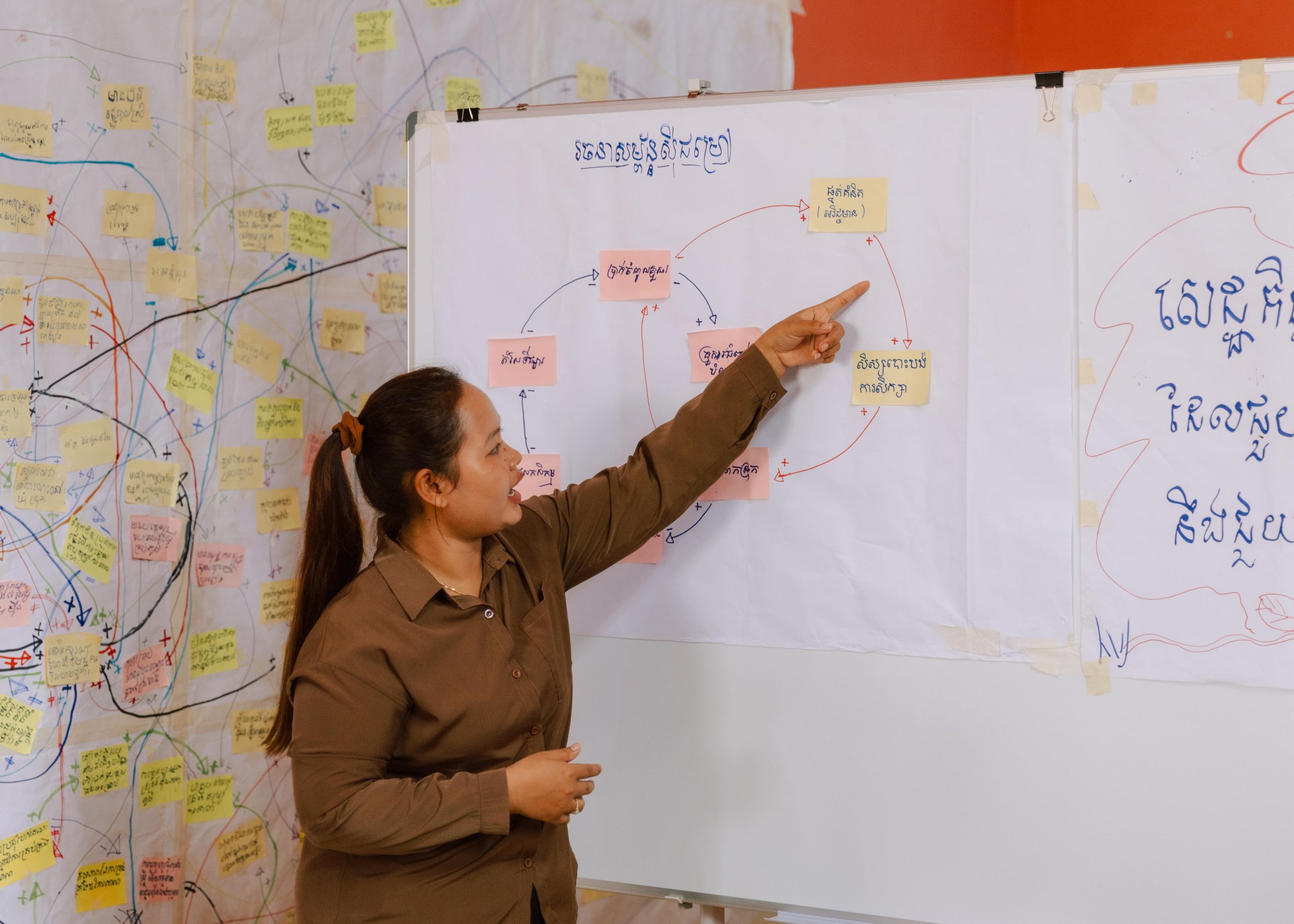
We had just arrived at the Chong Kal FH Cambodia office when I noticed a young woman, only a few years younger than me. She felt familiar, but having never been to Cambodia before, I knew we hadn’t met. We took our seats at a table as Vanthib, the young woman, and one of the community leaders showed us a map of their community’s struggles and strengths.
Vanthib explained how immigration was a root cause of poverty in her community. They had identified this major cause through a process called, “Systems Mapping.”
I listened as Vanthib confidently showed us—a group of strangers—her work. She told us that she was one of the few youth who stayed behind in her community, rather than immigrating to Thailand for work. Immigration, she told us, was a root cause of poverty in Chong Kal.
As she spoke, confidently and without hesitation, it hit me. I had seen her before—I had received her impact story just a few weeks ago.
In an interview, she had shared how she used to be shy and afraid to speak in front of others. She felt like she had no voice. “I have experienced significant personal growth since participating in FH programs, “she shared in the interview I had read just weeks before.
“I now can improve my knowledge, and good communication with family and with my community. Now I have confidence for preparing and training local leaders and villagers. Right now, I am experiencing an unprecedented level of confidence in my interactions with others… Each day brings me joy and a sense of personal growth as I strive for self-betterment.”
And there Vanthib was in front of me. I could see her confidence before my own eyes. She had the courage to stand side by side with an elder of her community, three times her age. She spoke to us, a group of foreigners, with the authority that she knew her community and was ready to be a leader on the journey out of poverty.
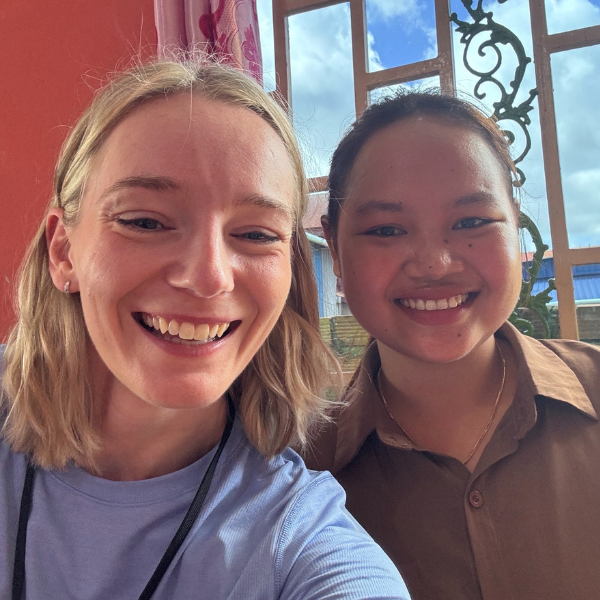
Here I am with Vanthib!
To be honest, I felt a bit star struck! She allowed me to take a selfie with her and it felt like a full circle moment—meeting one of the community members who inspired me every day sitting at my desk back at home.
Books and a smile bridged our worlds
Later that day, we went on to visit the Chong Kal Primary School, walking through classrooms where we heard children sing the ABCs and recite numbers.
We carefully took off our shoes to enter a library, paved with tiles and lined with shelves of books. I was surrounded by sixth grade students sitting crosslegged with books in their hands when I caught the gaze of a young girl eagerly looking at me. Her beaming smile was asking me to come over and say hello.
“Chum reap sua! Kyom chimor, Tatum. Kyom obi Canada!” (Hello! My name is Tatum. I’m from Canada!), I clumsily said, walking over to greet her.
She smiled, clearly my North American accent was entertaining. Spotting a world map pinned to the wall of the library, I pointed out where I had come from—Vancouver, Canada.
“How long did it take you to get here?” She asked with the help of a translator.
“Over forty hours!” I replied. Her eyebrows raised, struggling to comprehend the distance. She continued to show me the books in her school library and even let me take a few photos of her displaying the books.
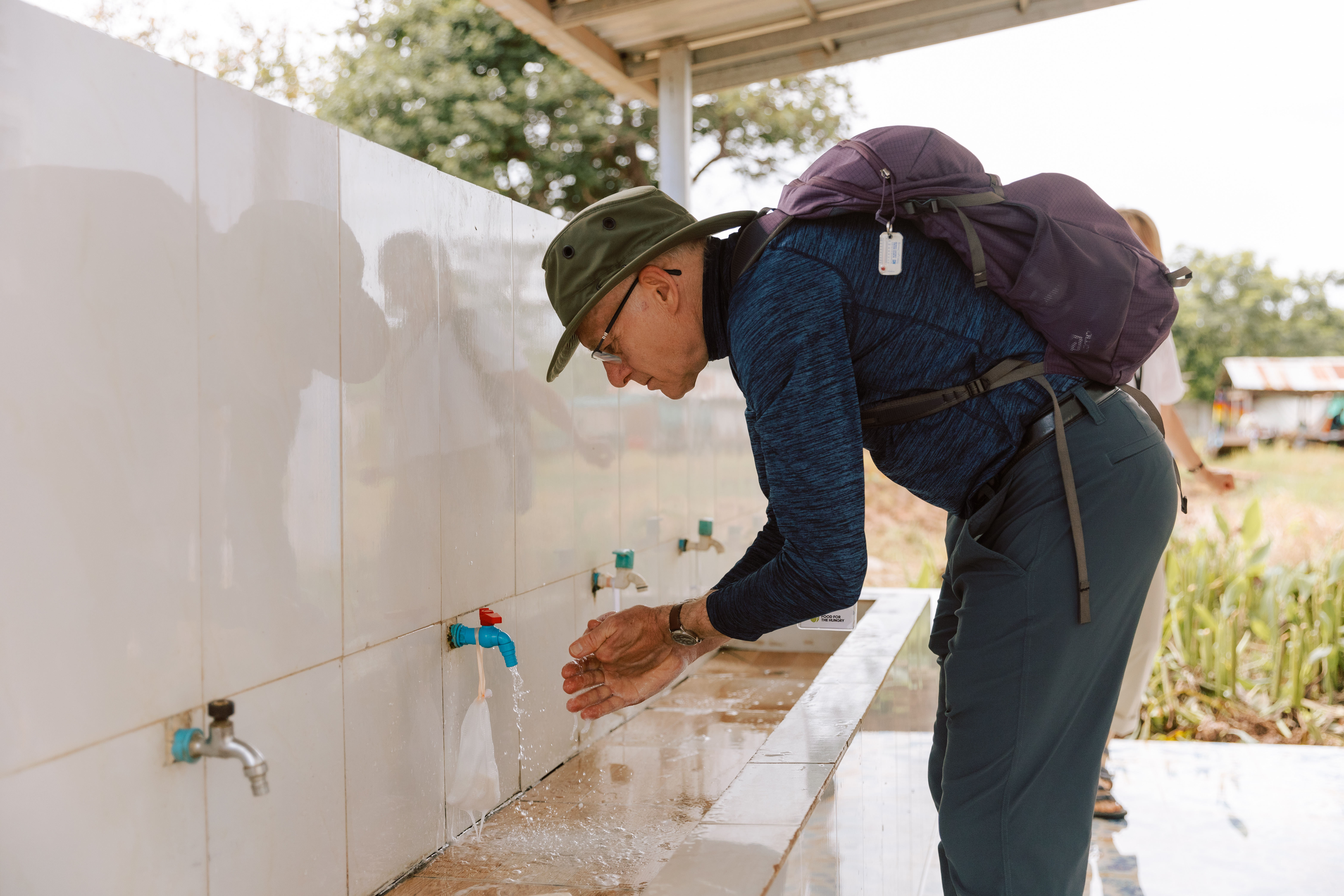
One of our team members, Jim, using the handwashing station behind the Svay Leu 1 Primary School.
Water was a life line
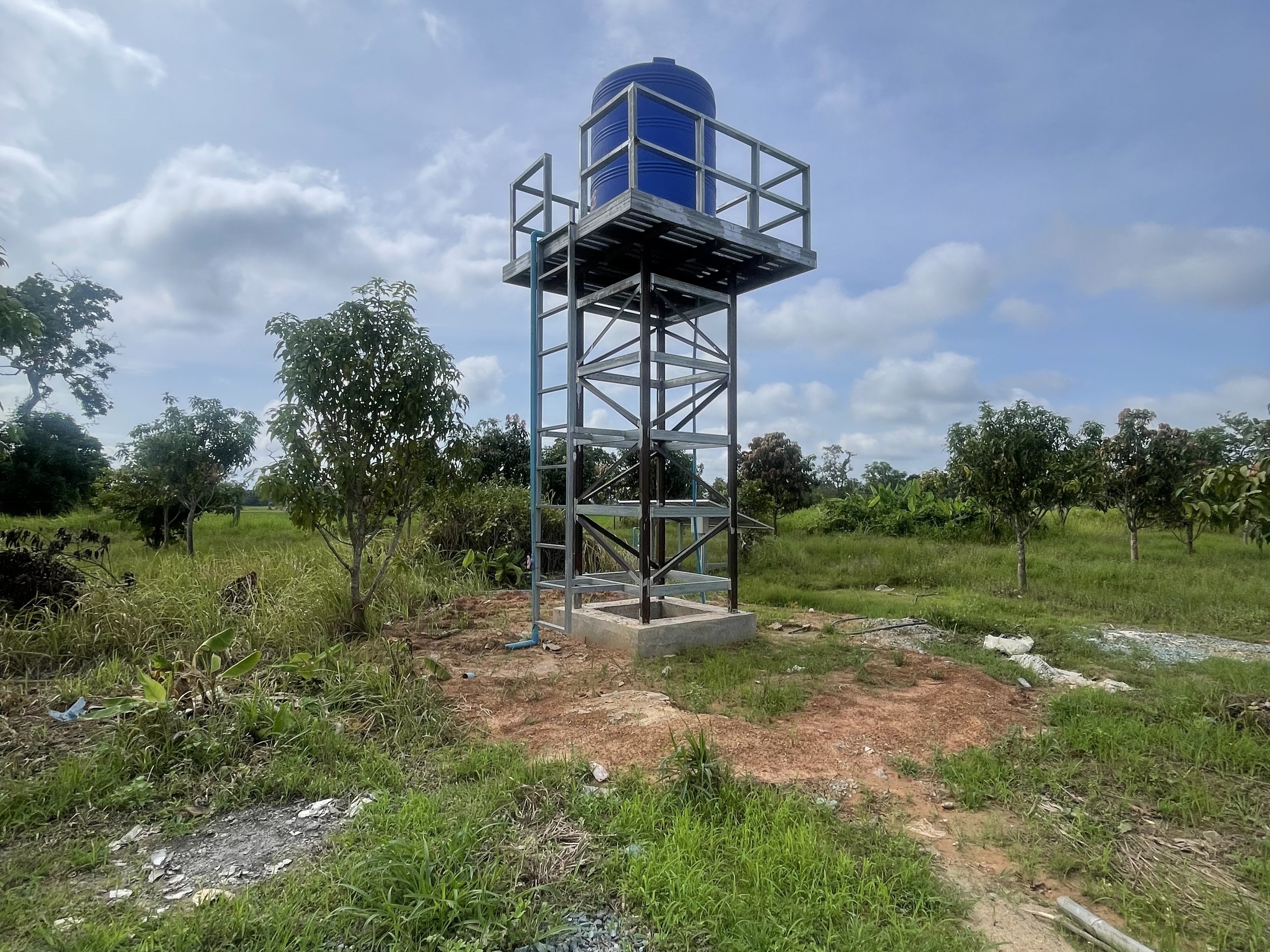
One of the first things I saw in the communities was a tiled handwashing station at Svay Leu Primary School. A few shy, giggling young girls ran past us to wash their hands. They carefully scrubbed their palms and between their fingers with water from the tap fed by gravity from a bright blue water storage tank perched above that read “FH Cambodia”. With their now clean hands, they could eat their lunch without getting sick from waterborne disease.
It’s not hard to imagine, standing in the heat, how sick kids can get here when they don’t have water. On the trip, my water bottle became a life line. Growing up in cooler West Coast summers, I couldn’t believe that what felt like 41 Celsius with humidity was their rainy winter season. I was losing fluids and kept my electrolyte tablets close.
Bong Channalen, FH Cambodia staff, made sure we always had water bottles since there was no potable water from taps in the city of Siem Reap. We were even warned against brushing our teeth with the water from the tap.
But it felt like a stark contrast, standing in the communities with freshly cold water bottles. It struck me that I couldn’t see where the women and children around us would get the water they needed in this heat.
A Night Without Water
On Thursday of our trip, Romono, the Tropeang Prasat Area Program Manager with FH Cambodia, told me the story of a pregnant woman who had travelled to the local health centre to give birth in the evening. While in labour, the electricity had cut out. And, there was no clean water for the doctors to wash their hands or safely deliver her child.
With no light, no water, and no safe way to proceed, they had to wait until morning to deliver the child.
After experiencing the sweltering heat and humidity myself, I could only imagine how uncomfortable and afraid the mother must have felt.
“Clean water saves lives and brings healthy babies,” Romono explained. If the health centre had been equipped with clean water then the doctors could have provided safe care.
He explained how right now, his team is working to build latrines, water taps, handwashing stations, and hygiene training for families in the community. It will mean kids won’t miss school from waterborne diseases, more mothers will survive childbirth, and the community will access better healthcare.
A Grandmother’s Triumph
Bi, a grandmother from our partner community in Svay Leu, is proof of how clean water transforms the present and future generations.
Every morning, Bi would scoop water from a nearby pond—brown, stagnant, and the source of recurring sickness in her grandchildren. Her grandchildren constantly missed school due to diarrhea from the pond water. So, Bi and her husband, Yut, woke up at 4:00 AM just to wait hours for a turn at a clean water source.
But Bi decided enough was enough. She attended FH training on handwashing, water filters, and hygiene. Then, in 2024, thanks to Canadian donors, FH Cambodia built a clean water system right near her home.
Today, her grandkids are healthy. They go to school. She and her husband can work. With a proud smile, Bi told us:
“FH has positively impacted my family, especially our health through safe water and education. We now prioritize clean drinking water and handwashing. We are extremely pleased to have a clean water source near our home.”
A water tower supplying clean water to families.
The Health Centres We’re Fighting For
In communities like Tropeang Prasat, health centres are more than buildings. They’re the foundation of a community’s health.
Health centres are where mothers bring their children when they’re riddled with diarrhea from unsafe water. They’re where husbands bring their pregnant wives, expecting their first—or second, or third—child. Where children receive routine checkups and vaccines. Where the community comes together to learn about how to stay healthy, use safe water, and wash their hands.
Clean water in a health centre is the difference between healthy kids and the risk of disease. It means health workers can wash their hands, sterilize equipment, and teach the next generation how to stay healthy and dignified.
Right now, Romono and his team are working to equip three health centres with clean water resources: water taps, sanitation, toilets, handwashing stations, and training for staff and families.
Why I Believe In This Work
There were signs of transformation in every school and home we visited. Kids at the handwashing station scrubbed their hands with water flowing from a well above. A healthy, young girl showed off her favourite books at the school library. Savings groups shared stories of how they were lifting their community. A farmer proudly walked us through his solar-powered chicken coop, with water tanks providing irrigation to the fields.
The silver thread between it all—clean water.
Clean water is the cornerstone for a thriving community: watering fields, filling cups, washing hands, and flowing with hope.
After meeting Cambodian families and communities, I’m convinced of this. Your support is a catalyst. These families have the strength and motivation to transform their communities. And we have the privilege of emboldening them on their path to a better future.
We get to be a part of their story of resilience and hope.
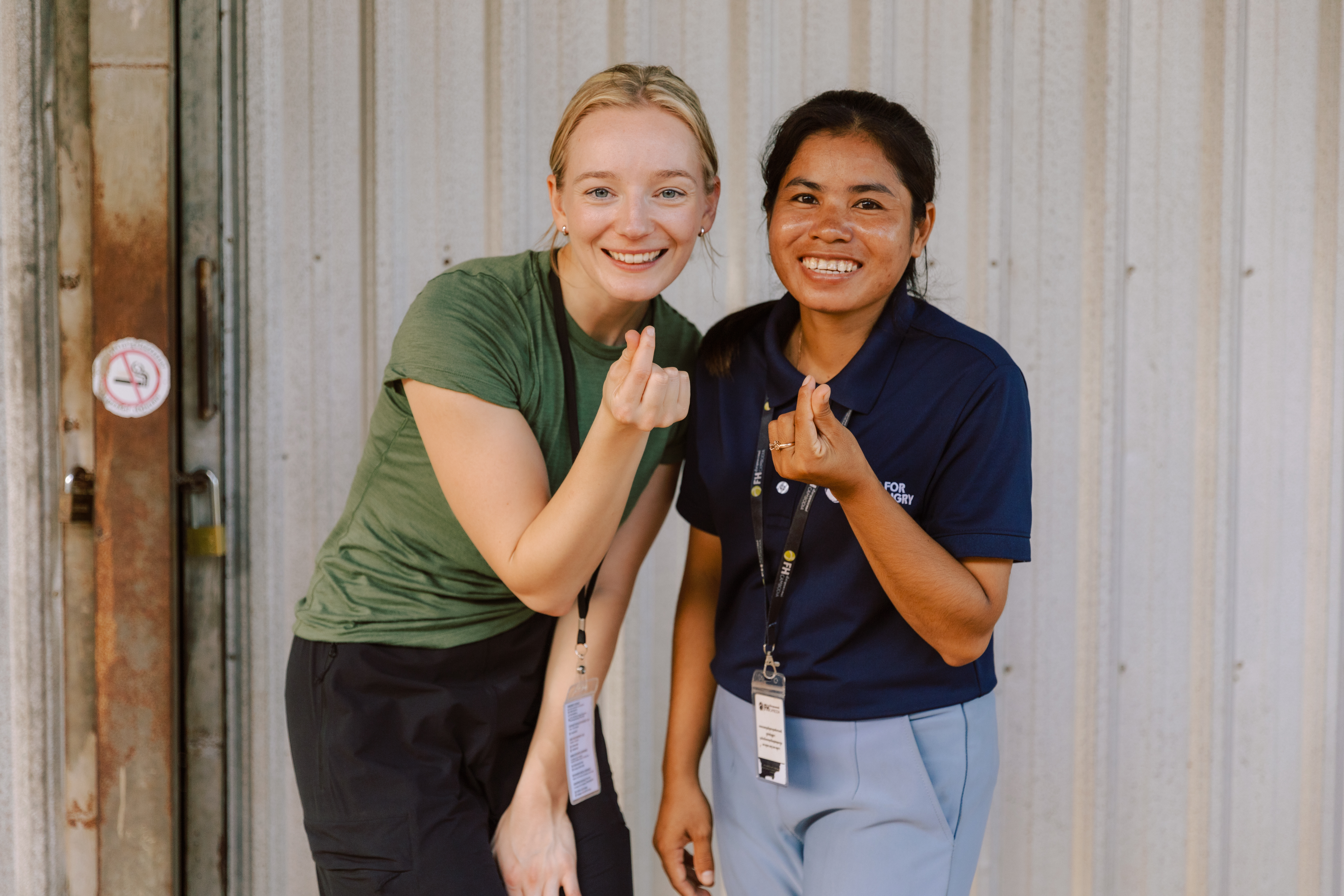
This is Soklai, an FH Cambodia staff member, and I. The staff at FH Cambodia took such great care of us and welcomed us to the communities!
Will You Help Bring Clean Water to Cambodia?
Families in Tropeang Prasat are still waiting. Mothers are still giving birth without clean water and children are still missing school from unsafe water.
Let’s change that.
Donate today to help build clean water systems in Cambodia’s health centres. Together, we can turn resilience into hope, and hope into health.
Story and photographs by Gemechu Abdissa, FH Ethiopia West Region Monitoring and Evaluation Coordinator
What’s your name and what is your position at FH Ethiopia?
My name is Gemechu Abdissa, and I work as the West Region Monitoring and Evaluation Coordinator. This means I work face to face with the community members that FH Canada donors support.
What inspires you to work with Food for the Hungry’s communities, like Leka Dulecha?
Working with FH partner communities, I feel I am responding to God’s calling so that children, families, and communities are protected, cared for, and given opportunities. Every day, I am a part of equipping communities to be places where families are valued, creation is preserved, and where the most vulnerable live in security and confidence. I want to see peace and justice reign, and for everyone—regardless of their state—to have the right to contribute to their communities and end poverty.
Can you tell us a bit about Leka Dulecha and the challenges they face in overcoming poverty?
Leka Dulecha is in West Ethiopia, marked by rugged terrain and flowing rivers. Most of the population earns a living through farming, so you’ll find many farms and animals driving through the country side. Here, conflict between the government and anti-government groups has disrupted life—often closing markets and basic services. Kids are often pulled out of school, putting girls especially at risk for early marriage.
Even though the land has potential, its producing less and less food as the soil has become more acidic. With so many farmers in Leka Dulecha, this means they aren’t able to meet ends meet. There is high unemployment rate, and students are performing poorly in school. Clean drinking water is inaccessible, while conflict has risen in the country, disrupting social cohesion.
What strengths does Leka Dulecha already have to overcome these problems?
While Leka Dulecha will face many challenges in the coming years, I already see strengths present in the community! The government has been restructuring their systems on the community level to ensure more peace and stability. They’ve already constructed their own local office. In recent times when there was intense conflict in Ethiopia, the people of Leka Dulecha supported each other, standing strong together through informal structures called “Idirs”, which shared information among the community and strengthened social connections. The communities have also already begun conservation agriculture practices to improve their crop productions. Clearly, the people of Leka Dulecha are ready to take the next step in their development, and they are committed to working together.
“Leka Dulecha is excited! They’ve told me how they appreciated FH’s unique approach of listening to their voices first, and that participating has built their sense of self-esteem and given them confidence to own their development.”
When you’ve talked with community leaders and families, what hope do they have for their community?
They are excited! They’ve told me how they appreciated FH’s unique approach of listening to their voices first, and that participating has built their sense of self-esteem and given them confidence to own their development.
They want to see their families and youth empowered. They want quality education available to their children from a young age, and want to see the most vulnerable community members access the services and resources they need. They dream of new job opportunities for their youth through agriculture and they dream of having clean water accessible. Most of all, they are happy and willing to participate and take ownership of their development so that future generations can thrive.
What personally inspires you about Leka Dulecha, and what do you hope to see there?
I look forward to seeing Leka Dulecha’s transformation, and seeing them become resilient and adaptive as we partner with them. I hope to see Leka Dulecha access quality education, quality health services, improve their agriculture and diversify income sources, improve gender equality, and improve sanitation. I hope to see Leka Dulecha flourish and thrive!
Is there anything you’d like to share with FH donors about Leka Dulecha?
I’d like to say thank you for your kindness and support! We simply couldn’t do what we do without amazing people like you. With your support, we can significantly expand our reach in the communities we serve. We’ve started this new journey with Leka Dulecha—all thanks to you. May God richly bless you.
Are you as excited about seeing communities lifted out of poverty as Leka Dulecha is? Join the journey, a monthly giving program where donors like you commit to walking with communities on their journeys out of poverty.
On Thursday, July 24, armed clashes broke out near a disputed temple along the Thailand – Cambodia border. This marks the most severe conflict between Cambodia and Thailand in over a decade.
Border dispute tensions have been ongoing for over a century as the two countries have contested sovereignty at various points along their 817 kilometre land border. But tensions reignited in May 2025 after a Cambodian soldier was killed during a brief exchange of gunfire, escalating the dispute into a diplomatic crisis.
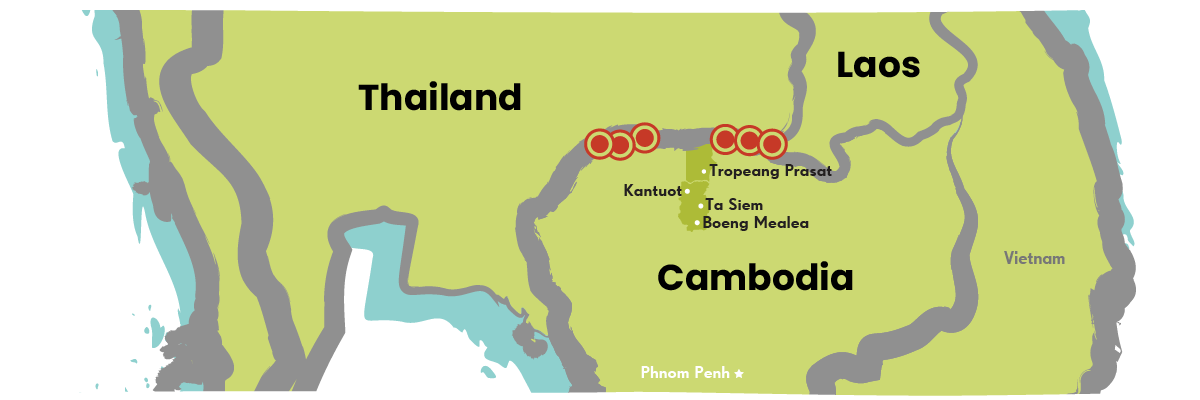
Clashes began early on Thursday near the disputed Ta Moan Thom temple, around 70 kilometres from Food for the Hungry’s partner community, Chong Kal. The situation escalated further when Thailand launched an airstrike and a landmine incident injured Thai soldiers.
Tragically, 12 people have now lost their lives, according to recent reports. Thousands of families are relocating and all schools in Oddar Meanchey are closed. Over 40,000 Thai civilians have also been evacuated from border areas.
As of July 27, nearly 40,000 Cambodians have been displaced and over 200,000 migrant workers have returned from Thailand. This number is expected to grow, straining resources in the area.
Update: Effective at midnight on July 28, Thailand and Cambodia have agreed to a 24-hour unconditional ceasefire.
FH Cambodia offices in the area have been temporarily closed. All FH staff are accounted for and community members are relocating to safe spaces.
Which FH communities are affected?
FH Canada’s partner communities are Chong Kal and Tropeang Prasat, located in Northern Cambodia. The conflict is 69 kilometres from Chong Kal and 158 kilometres from Tropeang Prasat.
Is my sponsor child safe?
Community members, including sponsor children’s families, are moving to safe spaces with extended families or to places provided by the government.
Are FH Cambodia staff safe?
As a security precaution, FH Cambodia has temporarily closed its offices in the areas closest to the conflict—including in Chong Kal and Tropeang Prasat. All FH Cambodia staff are safe and accounted for.
“Today (July 24, 2025), FH Cambodia has closed our offices in Chong Kal, Tropeang Prasat, Samroang, and Banteay Ampil,” states Titveasna Pin, FH Cambodia Country Director. “All our staff have already moved to safe spaces; their homeland, relatives’ houses, and safe places arranged by the government. Community members also started moving out of the communities.”
What is FH doing about the conflict?
FH Cambodia has coordinated water, sanitation, and hygiene materials to support the affected communities, including water tanks, latrine materials, and hygiene kits to evacuation sites.
FH Cambodia is also working with other international non-governmental organizations to gather information on the crisis. At this time, the safety of staff and community members is a priority. FH programs have been put on hold for the time being and we will be sure to update FH supporters as the situation progresses.
In the meantime, now more than ever these communities need clean water at health facilities, which will be critical in the response to this crisis and in the aftermath.
How can I support the communities affected by the conflict?
Please join us in praying for peace, safety, and healing for Cambodia, our partner communities, and the people of Thailand.
Your help is needed now more than ever. To make a meaningful difference, you can donate to the Water is Hope campaign. Your gift will directly support clean water and sanitation for health centres serving people in the affected areas. These essential resources will equip local doctors and community leaders with clean water to serve their community as they recover from this distressing time.